 listicle
Which Industrial 3D Printing Service Is Best for Engineers?
Last Updated: October 28, 2026
Quick Summary
The best industrial 3D printing service depends on your part and compliance needs: Craftcloud suits engineers comparing instant quotes, LS Manufacturing handles precision work, and Materialise offers an established service bureau. Screen any provider for process match, material data, tolerances, lead time, and traceability before committing.
- Ask which ASTM Committee F42 standards a shop follows before submitting your model.
- Confirm certifications like AS9100 or ISO 13485 apply to your specific process and material.
- Review DfAM first: part consolidation, wall thickness, and build orientation change cost and strength.
- Match the material family to the failure mode you cannot tolerate, then check the datasheet.
- 3D printing wins on internal channels and lattices; CNC machining wins on tight tolerances and higher volumes.
Table of Contents
- What to Look for in Industrial 3D Printing Services
- 1. Craftcloud: Instant Quotes Across a Network of Providers
- 2. LS Manufacturing: Precision Parts for Demanding Applications
- 3. GoEngineer 3D Printing: Hardware, Software, and Support in One Place
- 4. ADDMAN Group: A Provider Built for Industrial Work
- 5. Autotiv Manufacturing: Custom Work for U.S. Engineering Teams
- 6. MakeXYZ: A Marketplace for Outsourced Printing
- 7. Materialise: An Established Service Bureau for Industrial Parts
- 8. Quickparts: Service Bureau Sourcing for Prototypes
- Industrial 3D Printing Materials: What Each Family Does Well
- 3D Printing vs CNC Machining: Which Fits Your Part?
- How We Would Choose
- Frequently Asked Questions
What to Look for in Industrial 3D Printing Services
Choosing an industrial 3D printing service comes down to more than a quote and a lead time. Engineers may use technical screening to assess whether a part meets their requirements. This guide walks through eight services and selection criteria.
Industrial 3D printing is the production of functional parts through additive manufacturing processes, including powder bed fusion, stereolithography, and selective laser sintering, using engineering-grade thermoplastics or metal powders rather than hobbyist filament. Industrial-grade output requires documented material properties and repeatable tolerances, not just a printed shape.
Start with DfAM, not the vendor list
Design for additive manufacturing, or DfAM, decides more outcomes than the machine does. Part consolidation, wall thickness, minimum feature size, and build orientation all change cost and strength before a quote is requested. A bracket that consolidates three machined parts into one printed piece can cut assembly time and fasteners, but only if orientation puts layer lines perpendicular to the load path. Review the model for unsupported overhangs and trapped powder before submission, because supports or escape holes add cost.
The ASTM Committee F42 standards for additive manufacturing define the terminology and test methods that reputable providers report against, so ask which standards a shop follows. Ask which standards a shop follows.
The compliance question most guides skip
This is where most provider lists stop, and where professional engineers get burned. A shop that is excellent for a consumer product prototype may be the wrong partner for an aerospace or medical component. Ask which certifications the shop holds, and confirm they apply to the process and material you are buying, not just the company as a whole.
- Quality management: ISO 9001 is the baseline most industrial buyers expect. It signals a documented quality system, but it does not by itself certify a specific process.
- Aerospace: AS9100 extends ISO 9001 with aerospace-specific requirements for traceability, risk management, and configuration control. If your part flies, this is the conversation to have first.
- Medical: ISO 13485 covers medical device quality management. For patient-contact or implantable work, confirm the shop's scope and whether it supports the validation documentation your regulatory pathway requires.
- Automotive: IATF 16949 is the common quality standard for automotive production parts. Prototype work may not require it, but production volume often does.
- Material and process certifications: Ask for material certifications and inspection records tied to your build, not just a generic datasheet. A datasheet says what a material can do; a certification says what this build actually did.
Have a direct conversation with a shop before handing it a regulated part.
The rest of the screening checklist
Here is how we would screen any provider beyond compliance:
- Process match: Does the shop run the technology your geometry needs, or force your part onto the wrong machine? Powder bed fusion, stereolithography, and material extrusion each handle some geometries well and others poorly.
- Material data: Can they supply datasheets with mechanical strength figures for the exact grade, including the build orientation and post-processing that affect those figures?
- Tolerance and finish: What tolerance can they hold, and what post-processing is included versus extra? Vapor smoothing, bead blasting, and CNC machining of printed parts each change the surface and dimensional result, with their own cost and lead time.
- Lead time: Is the quoted turnaround for prototype iteration or production volume?
- Traceability: Do they provide inspection records and material certifications you can hand to a customer or a regulator?
Quick Comparison: Eight Services at a Glance
| Service | Best For | Model | Watch For |
|---|---|---|---|
| Craftcloud | Instant quote comparison | Network marketplace | Limited process detail up front |
| LS Manufacturing | Precision, demanding applications | Custom service | Details require direct contact |
| GoEngineer | Hardware plus engineering support | Reseller and support | Not a pure service bureau |
| ADDMAN Group | Industrial production work | Custom service | Verify processes per project |
| Autotiv Manufacturing | Custom work for engineering teams | Custom service | Confirm material list directly |
| MakeXYZ | Outsourced printing marketplace | Marketplace | Variable provider capability |
| Materialise | Established service bureau | Service bureau | Quote-driven, less instant |
| Quickparts | Service bureau sourcing | Service bureau | Confirm lead times early |
Read our breakdown of turnaround time for custom 3D printed parts before you commit to a date.
1. Craftcloud: Instant Quotes Across a Network of Providers
Best for: engineers comparing quotes for custom parts. Skip if: you need a single accountable partner for a production run.
If metal is on your shortlist, read what to know before ordering metal 3D printing first.
2. LS Manufacturing: Precision Parts for Demanding Applications
Best for: engineers seeking precision parts for demanding applications. Skip if: you need an instant online quote today.
3. GoEngineer 3D Printing: Hardware, Software, and Support in One Place
Best for: teams wanting solutions and technical support tied to SOLIDWORKS. Skip if: you only want to outsource printing with no software involvement.
4. ADDMAN Group: A Provider Built for Industrial Work
Best for: engineers evaluating industrial providers. Skip if: you need published, self-serve process specs before inquiring.
5. Autotiv Manufacturing: Custom Work for U.S. Engineering Teams
Best for: engineering teams sourcing custom printing domestically. Skip if: you need a fully documented online catalog first.
6. MakeXYZ: A Marketplace for Outsourced Printing
Best for: outsourcing overflow to local providers. Readers weighing marketplace options can explore Xometry alternatives for small business for small-business-scale work. Skip if: you need one standardized quality process across every order.
7. Materialise: An Established Service Bureau for Industrial Parts
Best for: engineers wanting an established bureau for outsourced parts. Skip if: you need the lowest-friction, fastest quote.
8. Quickparts: Service Bureau Sourcing for Prototypes
Best for: conventional bureau sourcing for prototypes. Skip if: you need a marketplace's breadth of provider choice.
Industrial 3D Printing Materials: What Each Family Does Well
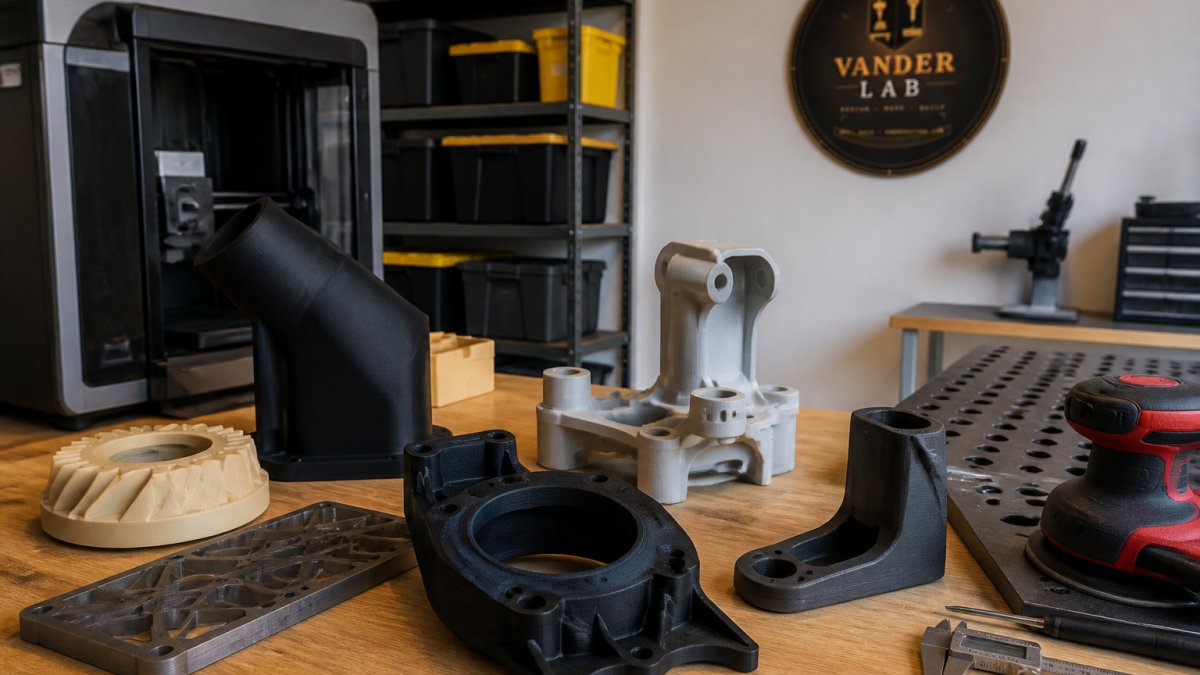
Material selection decides whether a part survives service. Thermoplastics cover most functional prototypes, with PLA for fit checks, PETG for toughness, ABS for heat resistance, and TPU for flexible parts. Selective laser sintering handles nylon parts with good mechanical strength and no support structures. Stereolithography delivers the finest surface finish for detailed prototypes. Metal powder bed fusion, including direct metal laser sintering, produces dense metal parts where strength is non-negotiable.
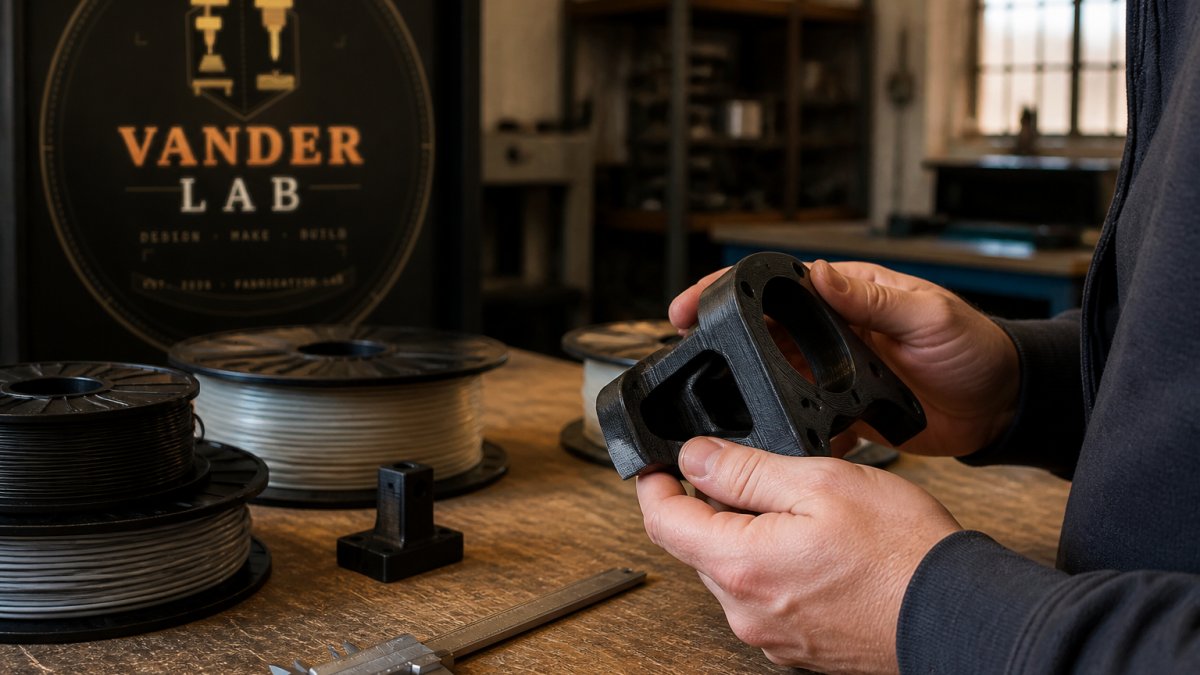
Our guide to the best 3D printing materials for functional parts breaks down which grade suits which load case. The short version: match the material to the failure mode you cannot tolerate, then check the datasheet.
3D Printing vs CNC Machining: Which Fits Your Part?
The answer depends on geometry, volume, and how the part integrates with your existing CAD/CAM workflow. The engineers who get the best results treat the decision as a workflow question, because the file you hand off and the post-processing you specify decide as much as the machine does.
The geometry and volume answer
3D printing wins on geometric complexity and part consolidation, letting you merge an assembly into one printed piece. Internal channels, lattice structures, and organic shapes a cutter cannot reach are where printing earns its place. CNC machining wins on tight tolerances, surface finish, and material choice across metals and engineering plastics, and usually beats printing at higher production volumes. For prototypes, the deciding question is whether your design needs internal channels or lattices a cutter cannot reach. If it does, print it. If it is a simple bracket that must hold a precise bore, machine it. Our comparison of CNC machining vs 3D printing for prototypes walks through the decision.
The workflow question most guides skip
DfAM and automated file analysis.
File formats and CAD integration.
Post-processing specifications.
Sustainability reporting.
A practical decision sequence
Run those five checks and the decision usually makes itself. The part that survives all five is the part worth quoting.
How We Would Choose
At VanderLab, we approach custom work the same way, one project at a time. If you have a part, a sign, or a rough sketch that needs to become a real object, request a custom quote and we will tell you honestly whether printing, machining, or another route fits best. You can also browse our eBay Shop for finished pieces and small-batch items.
VanderLab brings custom CNC machining, 3D printing, and CAD design under one roof, working from sketches, photos, or rough ideas to turn them into print- or machine-ready files. VanderLab works with PLA, PETG, ABS, TPU, wood, and metals.
Frequently Asked Questions
What is the best industrial 3D printing service for engineers?
There is no single best service because the right pick depends on your part. Match the service to your process, material, and volume before you compare quotes.
Which 3D printing services offer industrial-grade materials?
The services in this list present themselves as industrial or precision-focused, but the supplied research does not verify specific material lists for most of them. GoEngineer offers solutions from Stratasys, BLT, Formlabs, and UltiMaker, which points to industrial-grade hardware. LS Manufacturing describes its work as precision-focused and aerospace-grade. Before ordering, ask each provider for its material data sheets, process list, and tolerance documentation so you can confirm the material properties match your application.
How do engineers choose a 3D printing service?
Start with the part, not the provider. Define your requirements, then confirm the service supports them. Check material properties and mechanical strength against your load case, and confirm lead time. For production volume, ask about scalability and quality assurance.
What is the difference between industrial and desktop 3D printing?
Desktop printers are built for low-cost prototyping in materials like PLA and PETG, with looser tolerance and finish expectations. Industrial 3D printing services run production-grade machines and materials, including engineering thermoplastics and metal powder bed fusion, with documented quality assurance and repeatable results. That difference matters for functional prototypes and end-use parts, where mechanical strength and material properties decide whether the part works. If your design needs tight tolerance or certification, an industrial service is the safer starting point.
How do 3D printing services compare with CNC machining for engineering parts?
3D printing wins on geometric complexity and part consolidation, since design for additive manufacturing lets you combine features that would need multiple machined pieces. CNC machining holds tighter tolerance and a better surface finish on simple, load-bearing parts, and it works across a wider material range. For prototype iteration, printing is usually faster and cheaper per revision. For production volume of a simple part, CNC or injection molding often costs less per unit. Many engineers print the prototype, then machine the final part.