 listicle
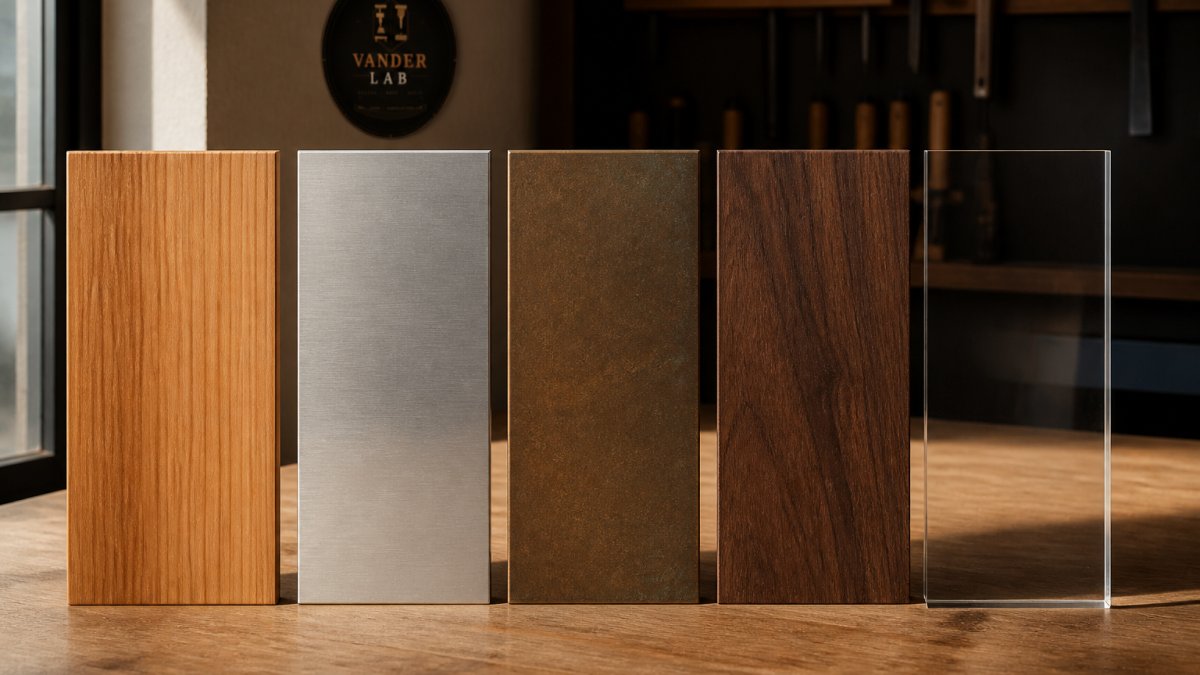
5 Best Materials for Custom Engraved Home Signs
Table of Contents
- Why Material Matters for Custom Engraved Home Signs
- Cedar: The Best Wood for Outdoor Signs
- Brushed Aluminum: Durability Meets Modern Design
- Bronze: A Timeless Material Built to Last
- Walnut: Rich Appearance for Indoor Custom Engraved Signs
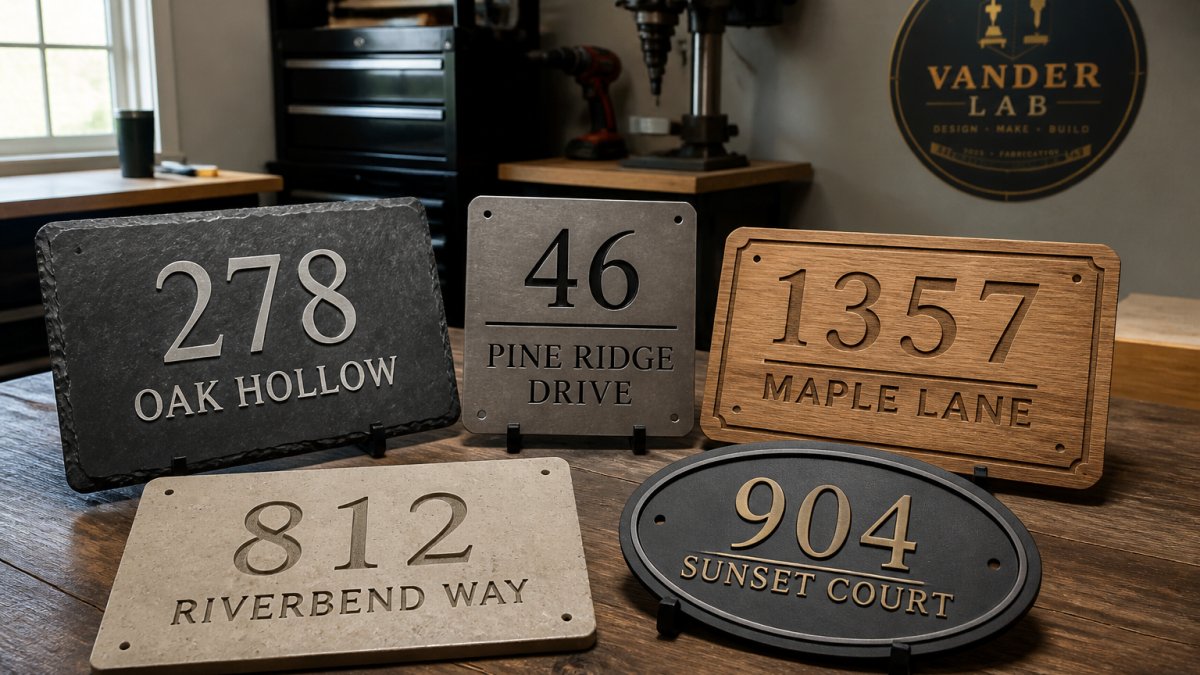
- Acrylic and Composite Materials: Best Material for House Numbers
- Making Weatherproof Outdoor Wood Signs Last
- Material Comparison and Selection Guide
- Frequently Asked Questions
Last Updated: October 13, 2026
Why Material Matters for Custom Engraved Home Signs
The material you choose for a custom engraved home sign shapes how it weathers, how the engraving looks, how long it lasts, and whether it fits your home's style. Cedar holds up outdoors, aluminum catches light in ways wood cannot, and bronze develops character over time, each telling a different story about what you value.
At VanderLab, we build custom engraved home signs from precision-routed hardwoods to CNC-machined metals. The choice matters because a sign is one of the first things people see approaching your home, and unlike most décor, it stays outside year-round, facing weather, UV exposure, and temperature swings.
Below, we'll walk through five materials that work for engraved home signs, what makes each different, where it thrives, and where it falls short, plus how to match material to location so your sign stays beautiful for years.
Cedar: The Best Wood for Outdoor Signs
Cedar is the go-to wood for outdoor custom engraved home signs. It naturally resists rot and insects through oils in the wood itself, engraves cleanly with sharp lines and fine detail, and takes stain or paint beautifully, or you can let it weather to a silver-gray patina that only gets more distinguished with time.
Cedar's tight, consistent grain keeps engraving crisp for years outside. It's soft enough to route and engrave without chipping, yet dense enough to hold up, and laser engraving produces dark, readable text that doesn't fade.
The trade-off: cedar requires thought about finishing. Seal it every few years to keep its warm honey color, or let it weather naturally to gray. It's also softer than some woods, so deep engraving needs precision equipment.
Brushed Aluminum: Durability Meets Modern Design
Brushed aluminum is lightweight, won't rust, and has a clean, contemporary look that works with almost any home style. It machines beautifully on a CNC router, holds tight tolerances, and its brushed finish hides fingerprints and minor scratches.
Aluminum engraves with contrast that reads well from a distance, achieving fine detail and small text without worry. It won't rot, split, or absorb water, outperforming wood in coastal or heavy-moisture areas, and it's lighter to install on vinyl siding or a stone facade.
The downside: brushed aluminum reads as modern, which doesn't always match a traditional or rustic home, and it can feel corporate if not designed carefully. It can also oxidize over time, developing a dull patina some love and others see as fading.
Bronze: A Timeless Material Built to Last
Bronze is for someone who wants their sign to last generations. Heavy and solid, it develops a rich patina that deepens its character, and the engraving stays sharp indefinitely. Bronze doesn't rust, warp, or need sealing, it just gets better looking.
Engraving bronze takes precision equipment since it's harder than wood or aluminum, but fine detail holds perfectly, and the contrast between polished and matte areas catches light in ways softer materials can't. It ages gracefully, developing a warm brown or greenish patina depending on climate and care.
The reality: bronze is heavy, and overkill for most home signs, and its formal look may feel like too much if you want something warm and casual. Because it's heavy, installation requires solid mounting points, a light wood frame won't work.
Walnut: Rich Appearance for Indoor Custom Engraved Signs
Walnut is the luxury wood for indoor signs and sheltered spaces. Dark and fine-grained, it has a richness cedar can't match, and engraving produces sharp contrast with light wood showing through dark stain. It's harder than cedar, so fine detail stays crisp.
Walnut works beautifully for entryway signs, interior name plaques, or anything sheltered, its color is sophisticated, its grain unique to every piece, and hand-finished edges feel premium. But it's not an outdoor material: it absorbs moisture and will warp or crack if left to weather, so save it for indoors or very protected locations.
If you love the look of walnut but need outdoor durability, consider walnut-stained cedar instead. It gives you the color without the maintenance headache.
Acrylic and Composite Materials: Best Material for House Numbers
Acrylic and composite panels offer flexibility solid wood or metal can't match. Acrylic is clear or frosted, lightweight, and can be laser-engraved or routed with precision, while composites, engineered wood-plastic blends, resist rot and insects while keeping a wood-like appearance.
For house numbers specifically, acrylic and composites shine: clear acrylic with lighting behind it creates a modern look, and routed composite mimics carved wood without the maintenance. Both accept paint and stain, and both are easy to mount.
The limitation: acrylic can yellow in direct sunlight over many years, and composites lack the character of real wood or the timelessness of metal. They're practical, not heirloom, choices, but for something that looks good, lasts a reasonable time, and needs little upkeep, they're solid.
Making Weatherproof Outdoor Wood Signs Last
Weatherproofing is where most sign guides get vague, so it's worth being specific about what happens to an engraved sign outdoors and what you can do about it.
What weather does to each material. Cedar and other outdoor woods fail in three predictable ways: moisture wicking into end grain and engraved grooves, UV bleaching, and freeze-thaw cycles opening checks along the grain.
Why engraving changes the equation. An engraved line is a channel where water sits, a flat board sheds rain, an engraved one gives it somewhere to pool. That's why finish matters more on an engraved sign.
Mounting and hardware. Water trapped behind a sign is the most common cause of premature failure. Stand the sign off the wall with small spacers so air moves behind it, or angle it so rain runs off.
Safety and sourcing. If you're sealing a sign yourself, work in a ventilated space and follow the product's cure time before hanging it outdoors. Cedar and walnut are available from responsibly managed domestic suppliers, and asking where the stock came from is reasonable for any maker.
Maintenance by material, at a glance.
Material Comparison and Selection Guide
Most sign guides stop at a table. The more useful question: given where your sign is going, which material actually makes sense? Here's how the five stack up, plus location-specific recommendations and how each behaves under different engraving processes.
| Material | Best For | Outdoor Life | Engraving Quality | Maintenance |
|---|---|---|---|---|
| Cedar | Outdoor signs, rustic style | 10-15 years | Sharp, clean lines | Seal every 2-3 years |
| Brushed Aluminum | Modern homes, coastal areas | 15+ years | Fine detail, high contrast | Occasional cleaning |
| Bronze | Heirloom pieces, formal settings | 30+ years | Exceptional detail, ages beautifully | Minimal; patina is the point |
| Walnut | Indoor, sheltered locations | 5-10 years indoors | Rich contrast, sophisticated | Dust; keep dry |
| Acrylic/Composite | House numbers, modern look | 7-10 years | Precise routing, clean edges | Occasional cleaning |
Matching Material to Location
Exposed front wall or fence line, full sun and rain. Cedar is the workhorse, bronze the heirloom option if budget and mounting structure allow, and brushed aluminum holds up well, especially in coastal air. Skip walnut and uncoated acrylic.
Covered porch or entryway. This is where walnut earns its place, sheltered from direct rain but still outdoors, it keeps its color and grain without cedar's maintenance. Cedar also works well here and holds its finish longer than in full exposure.
House numbers on a post or mailbox. Acrylic and composite are the practical pick, especially for modern homes where clean routed edges matter more than grain. Aluminum is a strong alternative if you want something that outlasts the post.
Interior name plaques and entryway signs. Walnut is the standout, cedar a warmer, lighter alternative, acrylic suits a contemporary interior, and aluminum a minimalist one.
Gates and driveway markers. Cedar or aluminum, depending on style. Bronze if you want something that will still be legible in thirty years.
Engraving Compatibility by Process
This is the part most guides skip, and it matters because the same material produces very different results depending on how it's engraved.
Laser engraving. Works on cedar, walnut, acrylic, and composite panels. On wood, it burns a dark, high-contrast line that reads well from a distance; on acrylic, it produces a frosted, etched look that catches light beautifully.
CNC routing. The right process for aluminum, bronze, and thicker wood signs. A CNC router cuts clean, deep grooves with tight tolerances, giving metal signs their crisp, dimensional look; on cedar and walnut, it produces a carved effect that hand-finishing can soften or highlight.
Rotary engraving. Traditional for bronze and other metals, and still the standard for fine detail on hard materials.
Hand-finishing. Whatever the process, the final step separates a good sign from a great one. Sanding engraved edges, filling or highlighting lettering, and applying the right finish give a sign the character a purely machine-cut piece lacks.
Choosing in Three Questions
Where will the sign live, full exposure, sheltered porch, or indoors? How long should it last? And what feeling should it convey?
A weathered cedar sign says welcome home with warmth and character. Brushed aluminum says clean, modern, intentional. Bronze says permanence and craft. Walnut says luxury and care. Acrylic or composite says practical and contemporary. Each material tells a story. Pick the one that matches your home and how you want to live in it.
If you're ready to move forward with a custom engraved home sign, custom quotes are available to discuss your material choice, design, and installation needs. You can also [browse finished examples and explore options at the VanderLab eBay Shop](https://www.ebay.com/str/vanderlab) to see how different materials and finishes look in real homes.
Frequently Asked Questions
What's the best material for a custom engraved home sign that will stay outdoors year-round?
Cedar and brushed aluminum are top choices for outdoor custom engraved home signs. Cedar resists weather naturally and develops character over time, while aluminum won't rot or rust when properly finished. Both accept laser engraving and CNC routing well. Your choice depends on the look you want: cedar offers warmth and natural appeal, aluminum delivers clean, modern lines. Bronze is another option if durability and timeless appearance matter most.
Can all materials be laser engraved for house numbers?
Most materials work, but with differences. Wood (cedar, walnut, basswood) and acrylic engrave cleanly with laser. Aluminum and bronze can be laser marked. If you're working with a fabricator, confirm they have experience with your chosen material, some shops specialize in specific processes like CNC routing for wood or laser engraving for acrylic.
Which material holds up best to weatherproof outdoor wood signs?
Cedar naturally resists rot and weathering better than pine or plywood, making it the best wood for outdoor signs. However, even cedar benefits from sealing or staining to extend life. For maximum durability without maintenance, brushed aluminum or bronze outlast wood significantly. If wood is your preference, cedar with a quality exterior finish will last many years on an exterior wall or entrance.
Is acrylic a good choice for indoor custom engraved signs?
Yes, acrylic works well indoors and offers design flexibility. It accepts laser engraving cleanly, can be clear or colored, and mounts easily. It's lighter than wood or metal, making installation simpler. Acrylic is also a practical choice for house numbers on interior walls or as part of a modern décor scheme. For durability and appearance, it sits between wood and metal in terms of long-term maintenance.