 listicle
7 Benefits of Laser Engraved Logo Signs
Table of Contents
- 1. Precision and Fine Detail in Logos and Lettering
- 2. Durability and Resistance to Wear
- 3. Professional Appearance and Brand Recognition
- Laser Engraving Materials for Signs
- 4. Customization and Personalization Without Limits
- Laser Engraving vs. Printing Signs
- 5. Production Speed and Repeatability
- Best Logo File Format for Laser Engraving
- Frequently Asked Questions
Last Updated: October 17, 2026
1. Precision and Fine Detail in Logos and Lettering
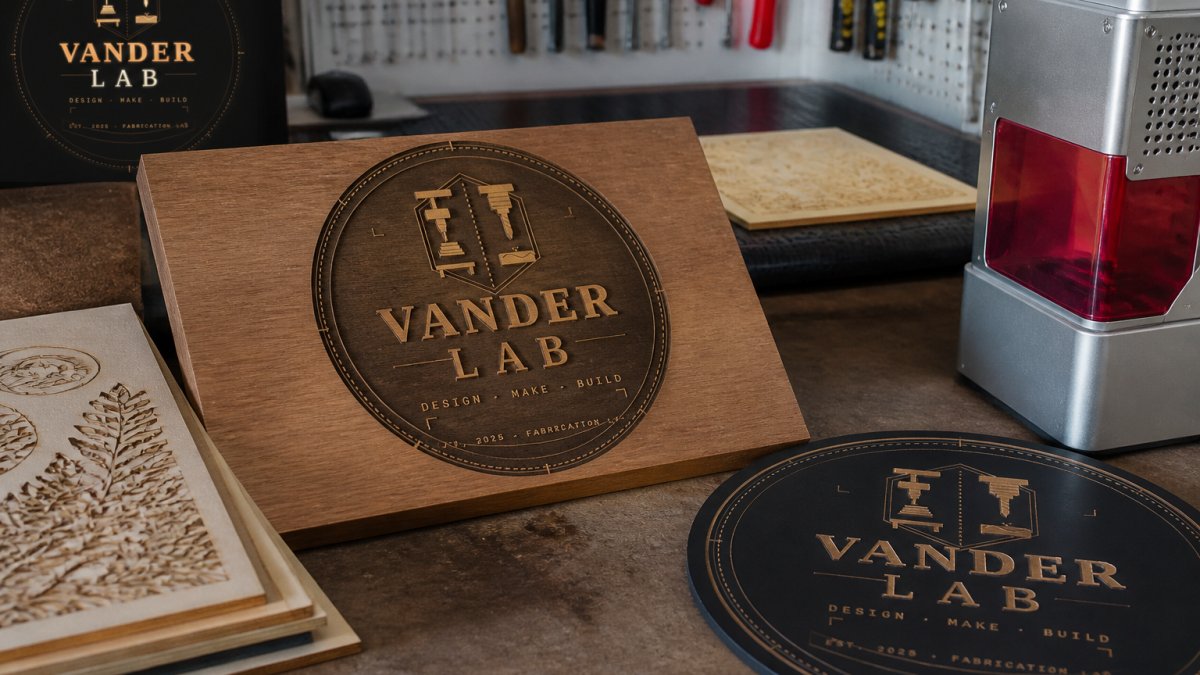
Laser engraved logo signs deliver sharp, clean detail that traditional methods struggle to match.
This precision matters because your logo is often the first thing a customer notices. When every detail is crisp, from the thinnest stroke to the smallest serif, your brand reads as intentional and professional. A smudged or imprecise logo does the opposite.
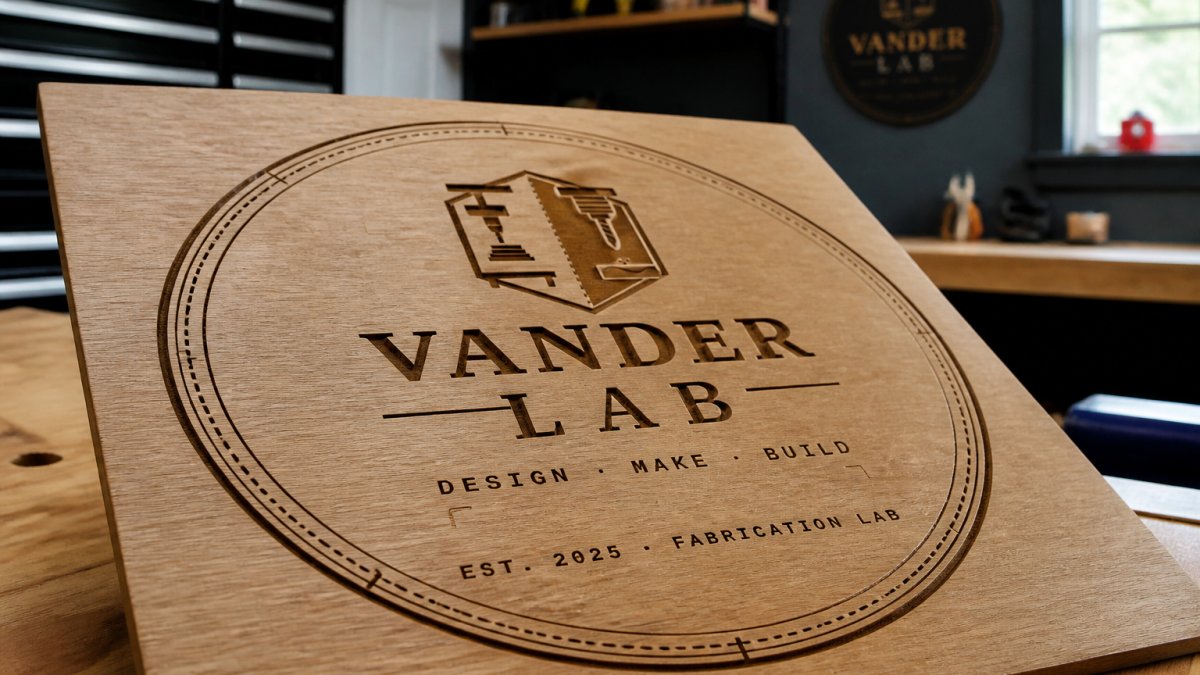
The laser doesn't require physical contact with the material, so there's no vibration, no tool deflection, and no material chatter. That means consistent results across every piece in a production run. Whether you're engraving your first sign or your hundredth, the quality stays the same.
For signmakers and businesses, this precision translates directly into perceived quality. A well-engraved sign looks handcrafted and intentional, not mass-produced or generic. That difference influences how customers perceive your brand before they ever read a word.
2. Durability and Resistance to Wear
Laser engraved logo signs don't fade, peel, or wear away like printed or painted surfaces. The laser removes material permanently, creating a mark that's as durable as the substrate itself. Whether your sign sits in bright sunlight for years or gets handled daily, the engraving stays sharp.
Unlike screen printing or vinyl decals, which can crack, bubble, or fade under UV exposure, laser engraving bonds the mark to the material at a molecular level. There's nothing on top to wear off. The mark IS the material.
This durability means your investment lasts. A laser-engraved wooden address sign or metal business plaque can outlive several generations of printed alternatives. For outdoor signage, that's a real advantage, especially in environments with temperature swings, humidity, or direct sun.
The permanence also matters for brand consistency. Your logo looks the same in year one and year five. That consistency builds trust and reinforces brand recognition over time.
3. Professional Appearance and Brand Recognition
A professionally engraved logo sign signals quality and intention. It tells customers you care enough to invest in something built to last, not something pulled off a shelf. That perception influences buying decisions, especially for premium or luxury brands.
Laser-engraved signage also stands out in crowded retail or office environments. The crisp detail, clean edges, and tactile quality of engraved surfaces catch the eye and feel substantial in a way printed signs don't. People notice the difference.
For businesses building brand identity, this matters. Your sign becomes part of your brand story. An engraved wooden address sign or metal logo plaque says something different than a printed vinyl one. It says you chose craftsmanship over convenience.
Brand recognition grows when your visual identity appears consistently across touchpoints. A custom-engraved logo sign reinforces that identity every time someone sees it. The detail and durability mean that mark stays recognizable for years.
Laser Engraving Materials for Signs
The material you choose shapes both the look and the lifespan of your engraved sign. But the more useful way to think about it is legibility: material, color contrast, finish, and engraving depth work together to determine whether your logo reads clearly from across a room or across a street. Two signs with the same logo file can look completely different depending on these four variables.
The Four Variables That Decide Legibility
Contrast. Engraving is essentially monochromatic, the mark is whatever color the material reveals beneath the surface. High contrast (dark mark on light material, or light mark on dark) reads at distance. Low contrast (subtle tone-on-tone) reads as refined up close but can disappear from far away.
Finish. A glossy surface throws reflections that can wash out an engraved mark under direct light; a matte or satin finish keeps the mark readable from more angles. For outdoor signs in full sun, matte finishes generally win on legibility.
Engraving depth. Deeper engraving casts a slight shadow that boosts contrast and gives the mark a tactile, handcrafted feel. Shallower engraving is faster and cleaner on fine detail but relies more on color contrast alone. Depth also affects how the mark ages, deeper cuts hold their shadow longer on materials that weather.
Line weight and spacing. Very thin strokes can lose definition on grainy materials like softwood; very tight letter spacing can fill in.
Material-by-Material Notes
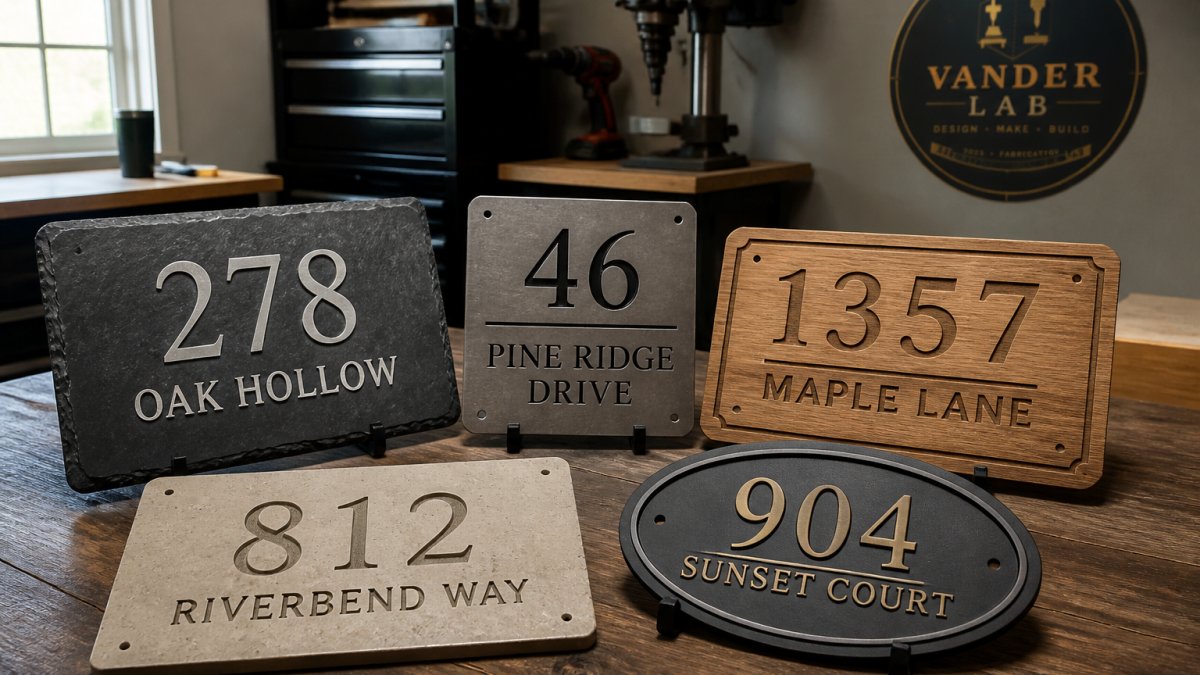
Wood burns to a dark, high-contrast mark against lighter species. Hardwoods like oak and walnut hold fine detail and age beautifully; softwoods engrave faster but show more char and can blur very fine lines. Wood signs feel warm and personal, ideal for home décor, welcome signs, and rustic branding.
Metal (aluminum, stainless steel, brass, copper) engraves with precision by removing the top layer. Anodized aluminum gives the strongest contrast for logo signs; stainless produces a subtle, sophisticated mark; brass and copper offer warmth with a patina over time.
Glass and acrylic engrave to a frosted appearance that diffuses light. Acrylic is faster and more affordable; glass is more elegant but more fragile. Both suit decorative signs, awards, and display pieces where a soft, luminous mark is the goal.
Leather accepts engraving for a refined, personalized look, permanent and full of character. Best for branded goods, custom gifts, and high-end packaging kept indoors.
The material choice affects not just appearance but also maintenance. Wood may need occasional sealing for outdoor use. Metal resists weather naturally. Glass and acrylic are easy to clean. Your engraver can advise on material selection based on your environment and use case.
4. Customization and Personalization Without Limits
Laser engraving removes the constraint of pre-made templates. You can engrave any design, any text, any combination of elements. That freedom means your sign can be exactly what you envision, not a compromise between what you want and what's available.
Custom logos, company names, dates, serial numbers, QR codes, or personalized messages all engrave with equal precision. You're not limited by inventory or production constraints. Each piece can be unique.
This flexibility is powerful for businesses. You can create limited-edition branded items, personalized gifts, or one-of-a-kind pieces without tooling costs or minimum orders. For makers and artisans, it means you can offer true customization without complexity.
The personalization also deepens emotional connection. A sign with your name, your address, or your story feels different than a generic one. People keep personalized items. They display them. They talk about them.
Laser Engraving vs. Printing Signs
Printing and laser engraving serve different needs. Understanding the tradeoffs helps you choose the right method.
Printing (screen printing, digital printing, vinyl decals) adds color and image quickly. It's fast for large runs and works well for photographic or multi-color designs.
Laser engraving removes material to create a permanent mark. It's monochromatic (one color, determined by the material) but durable. Engraved marks don't fade or peel. Setup is faster for small runs or custom pieces.
For durability and outdoor performance, laser engraving wins. Printed signs need replacement every few years; engraved signs last decades. For color and photographic detail, printing wins.
Many businesses use both. A printed background with an engraved logo overlay combines the strengths of each method. Your signmaker can advise on hybrid approaches.
The cost structure also differs. Printing has lower per-unit costs at high volumes but higher setup costs. Engraving has lower setup costs and works well for small runs or custom pieces.
5. Production Speed and Repeatability
Laser engravers produce consistent results quickly. Once your design file is ready, the laser can engrave multiple pieces in minutes. There's no hand work, no tool changes, no guesswork. Speed scales with batch size, whether you need one sign or one hundred, the process is the same.
Repeatability is a key advantage. Every piece in a production run looks identical. Your logo is the same on piece one and piece one hundred. That consistency is hard to achieve with hand methods but essential for branded products or award batches.
Setup time is minimal. Load the material, confirm the design, and start. No custom tooling, no long lead times. If you need to adjust the design, you can, just modify the file and engrave again. That flexibility means faster iterations and fewer mistakes.
For businesses running production batches, this speed matters. You can fulfill orders quickly without compromising quality. For makers and artisans, it means you can take on custom work without long turnaround times.
Best Logo File Format for Laser Engraving
Your logo file format shapes the quality of your engraved sign. The right format preserves detail and prevents surprises.
Vector formats (Adobe Illustrator .AI, Encapsulated PostScript .EPS, Portable Document Format .PDF) are ideal. Vectors store your design as mathematical paths, lines, curves, shapes (What is a Vector File & How to Use & Create Them). They scale infinitely without losing detail. A vector logo looks sharp at any size, from a small badge to a large sign.
Raster formats (JPEG, PNG, TIFF) store images as pixels. When you scale a raster image up for a large sign, the pixels enlarge, creating a blurry or pixelated result. Rasters work for photographs but not for logos. If your logo exists only as a raster, it may require additional preparation.
Preparation tips:
- Convert your logo to vector format before sending to your engraver
- Use high-contrast colors; engraving is monochromatic, so subtle gradients won't show
- Simplify thin lines, very fine strokes may not engrave cleanly on some materials
- Include all text as outlines, not live text, so the engraver can't accidentally change fonts
- Provide your file at actual size or note the intended dimensions clearly
Starting with a clean vector file helps ensure the best result.
At VanderLab, we've built precision laser engraving into our custom signage and fabrication work because we believe your brand deserves detail that lasts. Ready to create something built to last? Get a custom quote and let's turn your vision into a sign that tells your story. You can also browse our current work and offerings on our eBay Shop.
Frequently Asked Questions
Does laser engraving fade over time?
No. Laser engraving cuts directly into the material surface, creating a permanent mark that does not fade, peel, or wear away like printed graphics. The engraved mark becomes part of the material itself, making laser engraved logo signs resistant to fading even with years of outdoor exposure or frequent handling.
What materials work best for laser engraved logo signs?
Laser engraving works on wood, metal, glass, acrylic, leather, and many plastics. Wood and metal are popular choices for outdoor signage because of their durability and natural appearance. The material you choose affects the look and feel of the final sign, so consider your environment and the aesthetic you want before selecting materials for your custom sign.
How does laser engraving compare with printing or carved signs?
Laser engraving cuts into the surface, creating a mark that is permanent and resistant to peeling or fading. Printing sits on top of the material and can wear away over time. Carved signs require manual labor and are slower to produce. Laser engraving offers a balance of speed, precision, durability, and cost-effectiveness that makes it ideal for professional logo signs and custom branding.
What file format should I use for laser engraving a logo?
Vector file formats like AI, EPS, or PDF work best for laser engraving because they scale without losing quality. Avoid low-resolution raster images like JPG or PNG, which can appear pixelated when engraved. Prepare your logo file at high resolution and in a vector format to ensure clean, sharp results on your final sign.