 listicle
Which CNC Machining Finish Is Best for Metal Parts?
Last Updated: October 29, 2026
Quick Summary
The 5 best CNC machining finishes for metal parts are as-machined, bead blasting, anodizing, powder coating, and polishing or plating. Choose as-machined for hidden parts, bead blasting for uniform matte surfaces, anodizing for aluminum corrosion and wear resistance, powder coating for thick outdoor protection, and polishing or plating for reflective display pieces.
- As-machined is the cheapest and fastest finish, best for prototypes and hidden functional surfaces.
- Bead blasting delivers a satin-matte texture and is often the prep step before anodizing.
- Anodizing only works on aluminum; steel, brass, and copper need a different treatment.
- Powder coating adds measurable build thickness that can bridge small holes and interfere with tight-tolerance fits.
- Polishing can push surface roughness below 0.4 µm for reflective, premium parts.
Table of Contents
- 5 Best CNC Machining Finishes for Metal Parts at a Glance
- 1. As-Machined Finish: The Baseline for Every Metal Part
- 2. Bead Blasting CNC Parts for a Uniform Matte Surface
- 3. Anodizing Aluminum CNC Parts for Corrosion and Wear Resistance
- 5. Polishing and Plating for Reflective, Premium Surfaces
- How CNC Machining Surface Roughness Guides Your Choice
- Matching a Finish to Your Part Before You Order
- Frequently Asked Questions
5 Best CNC Machining Finishes for Metal Parts at a Glance
Choosing among the 5 best CNC machining finishes for metal parts usually comes down to three questions: how smooth the surface needs to be, how much wear and corrosion it must survive, and what the part should look like when it leaves the shop. The finish decision shapes cost, lead time, and fit as much as the machining itself.
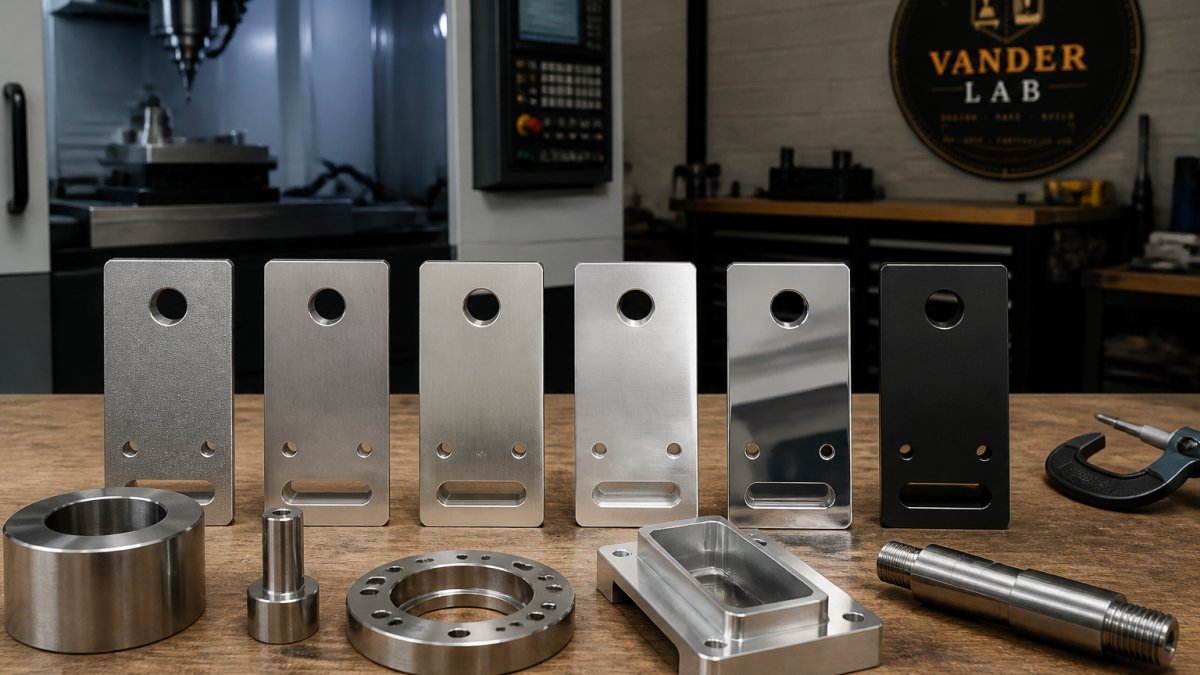
CNC machining finishes are the surface treatments applied after cutting to change a part's texture, appearance, or protection. The five most common options are as-machined, bead blasting, anodizing, powder coating, and polishing or plating. Below, they are ranked by practical use, with a selection table, roughness guidance, and the trade-offs to weigh.
Quick Comparison: Ra, Durability, and Best Use
| Finish | Typical Ra Range | Durability | Best Use |
|---|---|---|---|
| As-machined | Roughly 0.8-3.2 µm | Baseline only | Hidden or non-cosmetic parts |
| Bead blasting | Roughly 0.4-1.6 µm | Moderate | Uniform matte cosmetic parts |
| Anodizing (aluminum) | Follows base surface | High wear and corrosion | Aluminum enclosures, brackets |
| Powder coating | Follows base surface | High impact and corrosion | Outdoor and colored parts |
| Polishing and plating | Below 0.4 µm when polished | High, depends on plate | Display and reflective parts |
Ra, or roughness average, is the standard measure of surface texture, expressed in micrometers. Lower Ra means a smoother surface. These ranges are typical starting points, not guarantees, because the cutting tool, feed rate, and material all move the number.
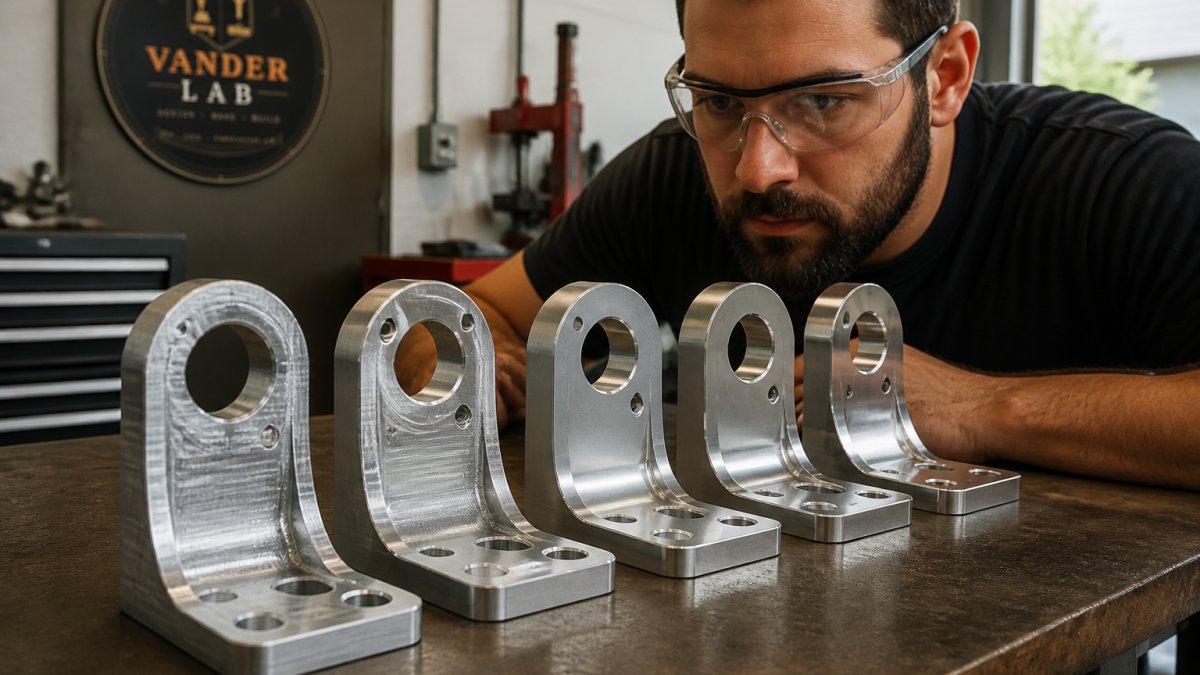
1. As-Machined Finish: The Baseline for Every Metal Part
The as-machined finish is exactly what the cutting tool leaves behind, with no secondary operation. It is the cheapest and fastest option, and it is the reference point every other finish is measured against.
Visible tool marks and a directional texture are normal here.
Where it works: internal brackets, fixtures, prototype iterations, and any surface nobody will see.
Best for: prototypes and hidden functional surfaces. Skip if: the part is visible, handled daily, or exposed to moisture.
2. Bead Blasting CNC Parts for a Uniform Matte Surface
Bead blasting CNC parts delivers a consistent, satin-matte texture by firing fine glass beads at the surface under pressure.
The process removes very little material, so it is safe for most finished dimensions.
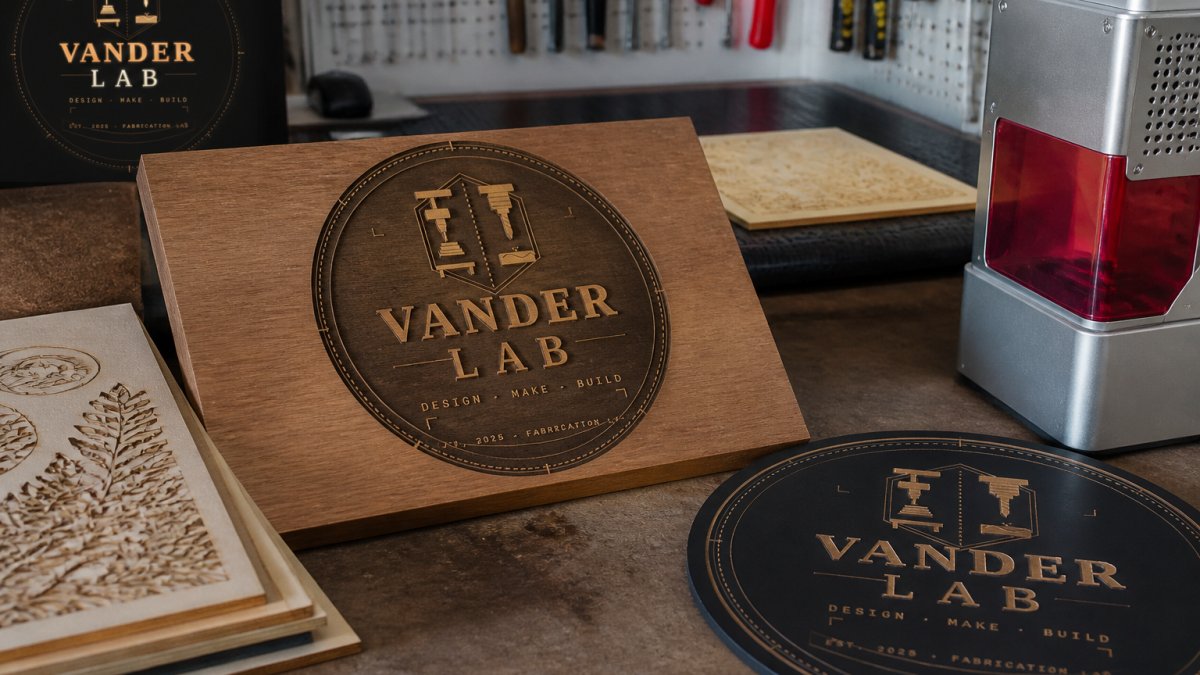
Bead blasting is often the prep step before anodizing, because a uniform base surface helps the coating look even.
Best for: cosmetic covers, control panels, and parts that will be anodized next. Skip if: the part has tight cosmetic edges or fine engraving you need to preserve.
3. Anodizing Aluminum CNC Parts for Corrosion and Wear Resistance
Anodizing aluminum CNC parts converts the surface into a hard oxide layer that resists corrosion and wear.
Type II anodizing is the common decorative and protective choice, available in a range of colors. Both are covered in Hubs' guide to CNC machining surface finishes, which walks through the anodizing types and where each fits.
Anodizing only works on aluminum. Steel, brass, and copper need a different treatment.
(https://blog.vanderlab.net/is-powder-coating-worth-it-for-custom-metal-furniture) takes a real-world look.Best for: outdoor parts, colored housings, and frames. Skip if: the part has fine threads, tight fits, or heat-sensitive components.
5. Polishing and Plating for Reflective, Premium Surfaces
Polishing and plating produce the most reflective, premium surfaces on this list.
This is the finish for display pieces, awards, and decorative hardware where appearance carries the value. Readers who want premium finishes on fabricated metal can explore custom metal fabrication services for small business.
A mirror finish shows every flaw, so the machining underneath has to be clean before polishing starts.
Best for: display parts, awards, and decorative hardware. Skip if: the part is functional, hidden, or budget-sensitive.
How CNC Machining Surface Roughness Guides Your Choice
CNC machining surface roughness is the single number that should drive your finish decision, but only if that number is specified correctly. Ra, or roughness average, is the arithmetic mean of surface profile deviations from a mean line over a sampling length. It is expressed in micrometers (µm) or microinches (µin), and lower Ra means a smoother surface. The catch most guides skip: Ra alone does not tell you the shape of the texture.
What the Numbers Actually Mean
A few reference points help translate Ra into shop-floor reality. A typical as-machined surface from a finishing pass on aluminum lands somewhere in the 0.8-3.2 µm range, while a roughing cut can run well above that. Bead blasting commonly brings a part into the 0.4-1.6 µm band. Polishing can push below 0.4 µm, and a true mirror finish sits far lower still.
How to Specify Ra on a Drawing
A finish callout on a drawing should do four things: state the Ra value, state the units, indicate the measurement direction, and note any surfaces that are exempt. Measurement direction matters because machined textures are directional. A surface that reads smooth across the tool marks can read rough along them, so the drawing should make clear whether the Ra applies parallel or perpendicular to the cutting direction. Sampling length, often called cutoff length, also affects the reading, a longer cutoff captures more of the waviness and can raise the reported Ra. Most practitioners specify a standard cutoff and note it alongside the value to avoid ambiguity at inspection.
Roughness, Coatings, and Tolerance Stack-Up
Roughness and finish are not independent. A coating like anodizing or powder coating follows the base texture, so a rough base shows through and a uniform base looks even. That is why shops often specify a machining Ra first, then a finish on top. For parts where roughness and tolerance requirements pull against each other, this guide to achieving tight tolerances in machining goes deeper.
Getting the Ra callout right the first time helps a project stay on schedule.
Matching a Finish to Your Part Before You Order
Match the finish to the part's job, not to a catalog photo. The fastest way to choose is to work through the application first, then confirm the tolerance and masking implications before the order goes to the shop. Below is the decision logic we use when a customer asks which of the five finishes fits their part.
Start With the Application
| Application | Recommended Finish | Why |
|---|---|---|
| Hidden bracket, fixture, or prototype | As-machined | No secondary operation, fastest and simplest |
| Visible aluminum cover or control panel | Bead blasting, often plus anodizing | Uniform matte look, even coating base |
| Outdoor aluminum enclosure or bracket | Anodizing (Type II or Type III) | Oxide layer resists corrosion and wear |
| Outdoor steel frame or colored housing | Powder coating | Thickest protection, holds color under sun |
| Display piece, award, or decorative hardware | Polishing and plating | Reflective, premium surface |
| Sliding wear surface | Hard anodizing on aluminum; plating on steel | Harder surface resists abrasion |
| Electrical contact point | As-machined or masked anodizing | Coating can interfere with conductivity |
Confirm the Tolerance and Masking Implications
Before you commit, check whether the finish changes the part's fit. Powder coating adds a measurable layer that can bridge small holes, soften edges, and interfere with tight-tolerance fits, so threads and mating surfaces need to be masked or the machining allowance adjusted. Anodizing holds dimensions more tightly because the oxide grows from the metal, but thread roots and electrical contact points may still need masking.
The Four Things to Confirm Before Ordering
Every order should answer four questions on the drawing: the base material, the required Ra, the surfaces to mask, and whether the finish adds thickness that affects fit. Getting these on the drawing up front avoids rework later. A common finish mistake is skipping the mask callout on threads, which can force a part to be re-machined.
A finish chosen with the application, tolerance, and masking in mind is the difference between a part that fits and one that comes back. Once the finish is settled, the step-by-step guide to ordering custom machined parts walks through placing the order. Before you commit, it helps to see how finish choices affect the cost of custom machined parts. If you'd rather talk through your part before committing, Custom Quotes let you describe the material, finish, and tolerances and get a straight answer,
Frequently Asked Questions
What are the best finishes for CNC-machined metal parts?
The five most common choices are as-machined, bead blasting, anodizing, powder coating, and polishing or plating. As-machined keeps costs down when looks do not matter. Bead blasting evens out tool marks for a uniform matte look. Anodizing aluminum CNC parts adds corrosion and wear resistance with color options. Powder coating gives the thickest, most color-fast protection. Polishing and plating deliver a reflective, premium surface. The right pick depends on your material, budget, and how the part will be handled.
What is the difference between as-machined and bead-blasted finishes?
An as-machined finish leaves the surface exactly as the cutting tool left it, including visible tool marks and a roughness set by your feed rate and spindle speed. Bead blasting CNC parts bombards the surface with fine media to knock down those marks and produce a consistent matte texture. Bead blasting hides minor cosmetic flaws and gives a uniform look, while as-machined is faster and cheaper but shows every pass of the tool.
Which CNC finish is best for aluminum parts?
Anodizing is usually the best fit for aluminum, especially 6061, because it grows an oxide layer that resists corrosion and wear while holding color well. Type II anodizing suits most decorative and functional parts, while Type III (hard anodizing) is chosen for higher wear. If color and a soft-touch look matter more than hardness, powder coating works too. For internal or non-cosmetic aluminum parts, as-machined or bead-blasted finishes often cost less.
Does anodizing improve the durability of CNC-machined parts?
Yes. Anodizing converts the aluminum surface into a hard oxide layer that resists scratches, corrosion, and wear better than bare metal. It also locks in dye for consistent color. The trade-off is that the oxide layer adds a small amount of thickness, so specify critical dimensions with that in mind. For steel, brass, copper, or titanium parts, plating and passivation are the comparable durability options rather than anodizing.
How do you measure surface roughness on a CNC-machined part?
Surface roughness is measured as Ra, the roughness average, in micrometers using a profilometer that traces the surface. A lower Ra value means a smoother finish. As-machined surfaces typically show higher Ra than bead-blasted or polished parts. When you specify a finish on a drawing, note the Ra target alongside the finish type so the shop knows whether appearance, function, or both are driving the call.
Picking a finish is really a conversation about how your part will live. Tell us the material, the environment, and the look you want, and we will match the right surface to it. VanderLab offers custom CNC machining, 3D printing, and CAD design, with the ability to work from a sketch, a photo, or a rough idea, plus local pickup and shipping. Get started with VanderLab and turn your next part into a finished piece built to spec.