 comparison
Metal vs. Wood Signs for Business: A Comparison
Table of Contents
- Metal vs. Wood Signs: Side-by-Side Comparison
- Metal Sign Materials and Construction
- Wood Sign Materials and Construction
- Metal Sign Durability and Maintenance
- Wood Sign Weather Resistance and Care
- Outdoor Business Sign Materials: Indoor vs. Outdoor Suitability
- Metal and Wood Combination Signs
- Customization, Appearance, and Brand Identity
- Frequently Asked Questions
Last Updated: October 10, 2026
Metal vs. Wood Signs: Side-by-Side Comparison
When you're choosing signage for your business, the material decision shapes everything that follows. Metal vs wood signs business applications demand different thinking about durability, appearance, and long-term value. Both materials deliver impact, but they perform differently in the field, and understanding those differences prevents costly mistakes down the line.
Metal signs resist weather and hold their finish for years in harsh outdoor or indoor spaces. Wood signs bring warmth and character, aging gracefully with maintenance. The choice depends on your environment, brand identity, and maintenance commitment.
The best material choice depends on three factors: location (indoors or outdoors), maintenance commitment, and visual story. Below are the practical differences.
| Material | Best For | Weather Resistance | Maintenance | Lifespan | Visual Impact |
|---|---|---|---|---|---|
| Metal | Outdoor, high-traffic, modern aesthetic | Excellent | Minimal | 10-20+ years | Sleek, professional, contemporary |
| Wood | Indoor, sheltered areas, warm aesthetic | Fair to good (with finish) | Regular | 5-15 years (varies by climate) | Warm, natural, inviting |
| Metal + Wood Combination | Mixed environments, distinctive branding | Excellent | Moderate | 10-20+ years | Unique, balanced, premium feel |
Metal Sign Materials and Construction
Metal signs use aluminum, stainless steel, or mild steel.
Metal signs are fabricated via CNC routing, laser cutting, or welding, then finished with powder coating, anodizing, or paint. Quality finishing extends lifespan by creating a durable barrier against UV and moisture.
Metal holds tight tolerances and sharp details, making it ideal for fine lines, small text, and intricate logos.
Wood Sign Materials and Construction
Wood signs use cedar, redwood, or hardwoods like oak and maple.
Wood is shaped via CNC routing or hand carving, then sealed or stained. Quality finishing is essential, without it, wood can deteriorate; with proper sealing, it can last outdoors with refinishing.
Wood develops a patina with age, growing more beautiful with maintenance. Its warmth conveys craftsmanship, appealing to local businesses, restaurants, and heritage brands.
Metal Sign Durability and Maintenance
Metal signs need minimal upkeep. Powder-coated aluminum and stainless steel require occasional cleaning.
Metal requires minimal touch-ups over its lifetime, while wood may demand more frequent refinishing. Metal resists fading, cracking, warping, or splintering from moisture or temperature swings.
Metal repairs are often straightforward. Wood repairs can be more involved, making metal a practical choice for high-traffic or accident-prone locations.
Metal signs can offer long-term durability with minimal care; wood can last for many years depending on climate and maintenance. In harsh environments, metal often offers greater longevity.
Metal signs can be stripped and recoated if the finish fails, extending lifespan. Wood with failed sealant often requires full refinishing or replacement, making metal a strong long-term option.
Wood Sign Weather Resistance and Care
Wood's weather resistance depends on species and finish. Cedar and redwood are naturally rot-resistant but need sealing; other hardwoods require regular maintenance. Sheltered signs last far longer than exposed ones.
Quality marine-grade sealant or exterior stain creates a moisture barrier. Without it, rot can set in. Refreshing periodically extends lifespan, an ongoing commitment, not a one-time investment.
Temperature and humidity shifts cause wood to expand and contract, cracking paint or peeling finishes. Wood signs in variable climates need more frequent maintenance than those in stable climates.
Outdoor Business Sign Materials: Indoor vs. Outdoor Suitability
Outdoor, High-Exposure Scenarios
Metal excels in harsh outdoor conditions, offering long-term durability with minimal fading. Wood works outdoors only with rot-resistant species and refinishing periodically, offering a shorter lifespan in harsh climates compared to metal.
Outdoor, Sheltered Scenarios
A sign under an eave, on a covered porch, or in a recessed storefront entry faces far less weather stress. In these sheltered positions, wood becomes viable outdoors. The reduced moisture and UV exposure mean refinishing intervals can be extended, and the sign may last for many years with reasonable care. Metal still works and requires less maintenance, but the durability advantage narrows.
Indoor Retail and Storefront Scenarios
Both materials work fine indoors because they're protected from weather. The choice becomes purely aesthetic and functional. Wood creates warmth and character in retail spaces, offices, restaurants, and hospitality settings. It signals authenticity, local roots, and craftsmanship, qualities that resonate with customers seeking a personal touch. Metal delivers a modern, professional look that suits tech companies, corporate offices, contemporary retail, and brands that want a polished, precision-engineered appearance.
Visibility and Legibility by Material
Metal's reflective qualities can be an advantage or disadvantage depending on lighting. A brushed or powder-coated metal sign catches light and draws attention from a distance. However, in certain lighting conditions (direct sun, bright interior lighting), glare can reduce legibility.
Climate-Specific Guidance
In stable, mild climates (moderate temperature swings, low humidity, minimal salt exposure), both materials perform well outdoors with reasonable maintenance. Wood and metal can offer long-term durability. In variable climates (significant seasonal swings, high humidity, or salt air), metal can be a more robust choice. Wood still works but may demand more vigilance. In extreme climates (high desert with intense UV, coastal zones with salt spray, or regions with heavy freeze-thaw cycles), metal is often preferred.
Business Type and Placement Framework
- Restaurants and hospitality: Wood (sheltered or indoor) for warmth and character; metal (outdoor, high-traffic) for durability if the storefront faces weather.
- Retail boutiques and local shops: Wood indoors or sheltered outdoors for authenticity; metal for contemporary or high-traffic storefronts.
- Tech companies and corporate offices: Metal indoors for a professional, modern look; wood only if the brand identity specifically emphasizes local or handcrafted values.
- Workshops, warehouses, and industrial businesses: Metal outdoors for durability and low maintenance; wood rarely fits the aesthetic or functional needs.
- Professional services (law, accounting, real estate): Metal indoors for polish and precision; wood if the brand emphasizes local roots or heritage.
- Outdoor-facing storefronts in high-traffic areas: Metal, unless the sign is sheltered and the brand identity strongly favors wood.
Metal and Wood Combination Signs
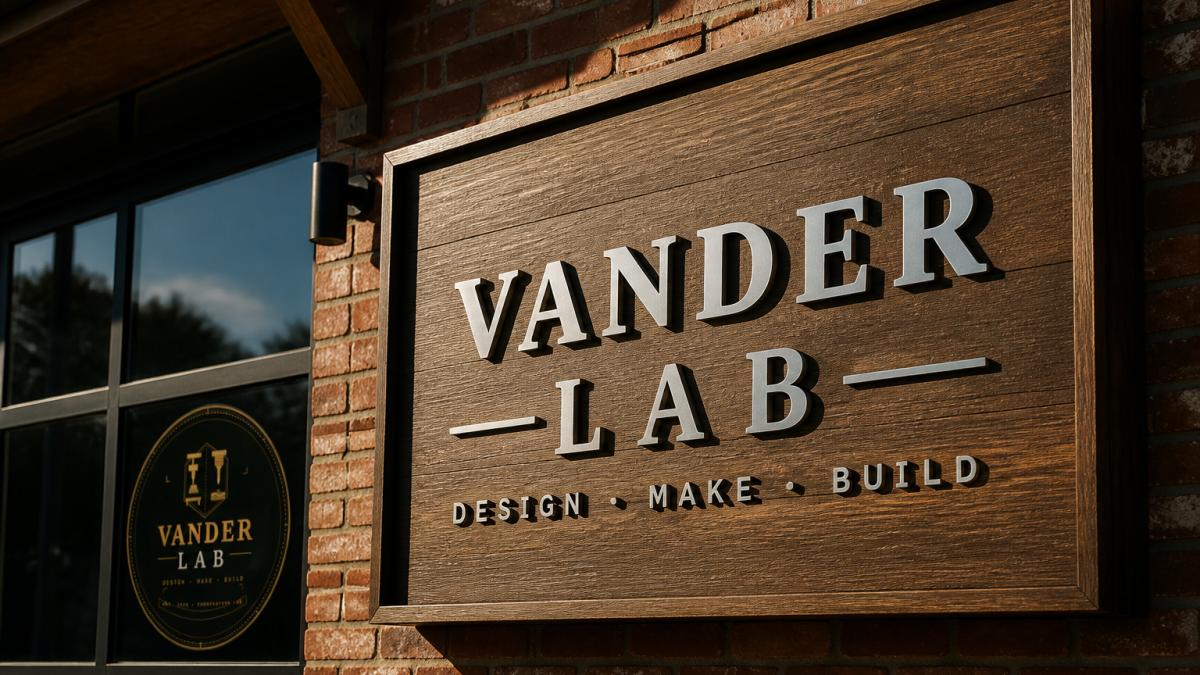
Some of the most distinctive business signs combine both materials. A wood backing with metal lettering, or metal frame with wood panels, creates visual contrast and depth that either material alone cannot achieve. These hybrid signs are where precision fabrication and handcrafted finishing come together.
A metal-and-wood combination sign can deliver the best of both worlds: the durability and clean lines of metal paired with the warmth and character of wood. The metal elements handle the weather exposure while the wood adds visual richness. These signs often command attention precisely because they stand out, they're clearly custom-built rather than mass-produced.
The construction complexity is higher. The metal and wood must be fabricated separately, then integrated with precision so gaps are tight and finishes align. This is where working with a fabricator who understands both materials makes a difference. At VanderLab, we've built combination signs where CNC-routed metal lettering is mounted on hand-finished wood panels, creating pieces that feel intentional and premium.
Customization, Appearance, and Brand Identity
Both materials offer extensive customization. Metal can be laser-cut or CNC-routed into complex shapes, painted any color, and finished with powder coating in virtually any hue. Wood can be hand-carved, routed with intricate detail, stained to match your brand colors, or painted. The question is what visual story you want to tell.
Metal signage projects professionalism and modernity. It works well for tech companies, professional services, contemporary retail, and brands that want a clean, polished appearance. The precision of metal fabrication makes it ideal for logos with fine detail, small text, or geometric precision. Metal also handles 3D lettering and dimensional effects that create shadow and depth.
Wood signage conveys authenticity and craftsmanship. It's the choice for local businesses, heritage brands, restaurants, and any operation that wants to feel established and rooted. Wood's natural grain variation means no two signs are exactly alike, each has character. This uniqueness is a strength if your brand identity centers on being local, handmade, or distinctive.
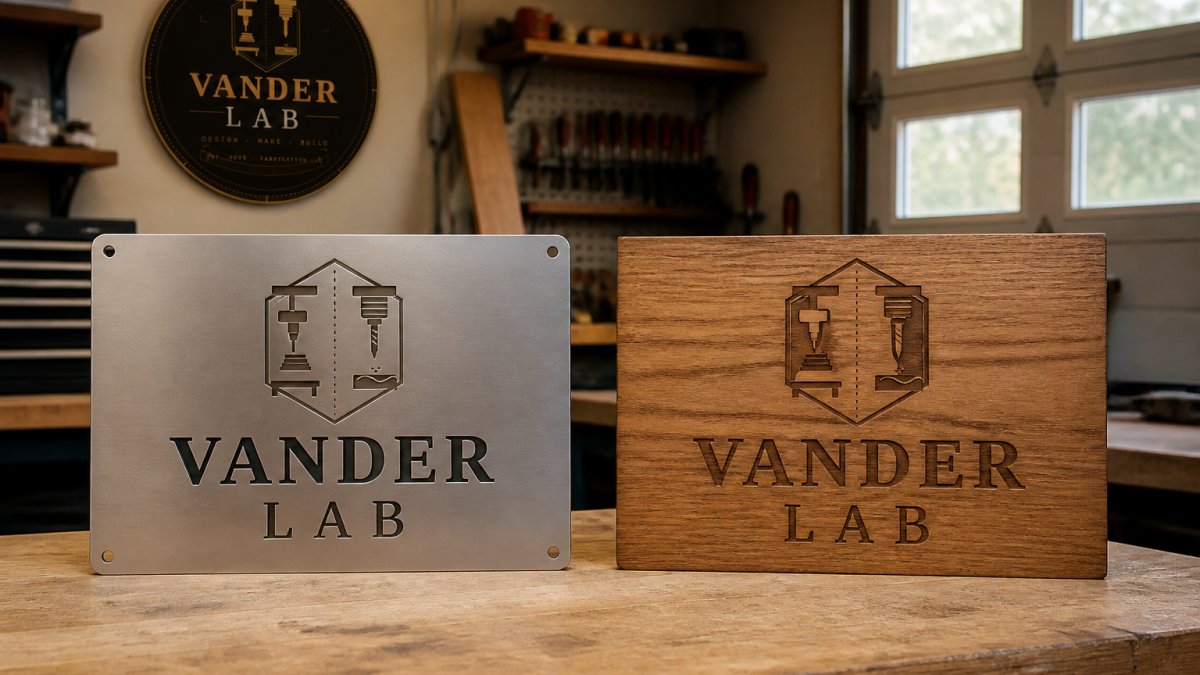
Custom logos work on both materials. A metal sign can reproduce your logo with tight tolerances, ensuring brand consistency. A wood sign can be routed or carved to match your logo, creating a more artisanal interpretation. Neither is "better", the choice depends on whether you want mechanical precision or handcrafted character.
Choosing between metal vs wood signs business applications comes down to your environment, maintenance capacity, and brand voice. Metal delivers durability and precision, it's a practical choice for outdoor, high-traffic, or low-maintenance scenarios. Wood brings warmth and character, it's a good choice when you want your sign to feel intentional and rooted.
At VanderLab, we work with both materials to build custom signage that matches your exact needs. Whether you need a precision-fabricated metal sign for a storefront, a hand-finished wood piece for a welcoming entrance, or a combination that brings both together, we can turn your vision into a sign that lasts.
Frequently Asked Questions
Are metal or wooden signs better for a business?
Neither is universally better, it depends on your environment and brand. Metal signs excel in harsh outdoor conditions, resist fading and warping, and project a modern or industrial aesthetic. Wood signs offer warmth, a natural appearance, and strong brand personality, but require more maintenance outdoors. For high-traffic outdoor storefronts, metal typically lasts longer. For indoor spaces or brands emphasizing craftsmanship and tradition, wood often fits better. Consider your location's weather, how often you'll maintain the sign, and the image you want to project.
Which business sign material lasts longer outdoors?
Metal signs generally last longer outdoors. Aluminum and stainless steel resist rust, corrosion, and UV fading with minimal maintenance. Wood signs, even when sealed and finished, typically last for several years outdoors before weathering, cracking, or warping becomes noticeable. Wood's lifespan can shorten in wet climates or areas with intense sun exposure. Metal's durability can make it a practical choice for permanent outdoor signage in many environments.
Can wooden business signs be used outdoors?
Yes, but with conditions. Solid wood signs can be used outdoors if properly sealed with weather-resistant finishes and maintained regularly. High-quality exterior wood stains, polyurethane, or marine-grade coatings protect against moisture and UV damage. However, wood still requires periodic resealing to prevent fading, cracking, and warping. In humid or rainy climates, wood can deteriorate faster. For low-maintenance outdoor signage, metal can be a more suitable choice; wood works best for covered entries, sheltered locations, or businesses willing to invest in ongoing upkeep.
What type of metal is best for outdoor business signs?
Aluminum and stainless steel are strong choices. Aluminum is lightweight and corrosion-resistant, making it suitable for many outdoor applications. Stainless steel offers durability and a premium appearance. Aluminum works well for painted or powder-coated finishes, while stainless steel suits polished or brushed looks. Avoid mild steel outdoors unless it's galvanized or powder-coated, as it rusts quickly. Copper and brass develop attractive patinas over time but require specific care. For durability with minimal maintenance, aluminum or stainless steel are excellent options.
Can a business sign combine wood and metal?
Absolutely. Combination signs blend the best of both materials: metal lettering or frames paired with wood backing creates visual interest and durability. Metal accents (aluminum, stainless steel, or brass) resist weathering while wood adds warmth and character. This approach works especially well for brands wanting a handcrafted feel with long-lasting performance. The metal typically handles exposure while the wood is positioned for protection or accent. Combination signs require attention to how materials connect, proper sealing and hardware prevent moisture from trapping between materials and causing damage.