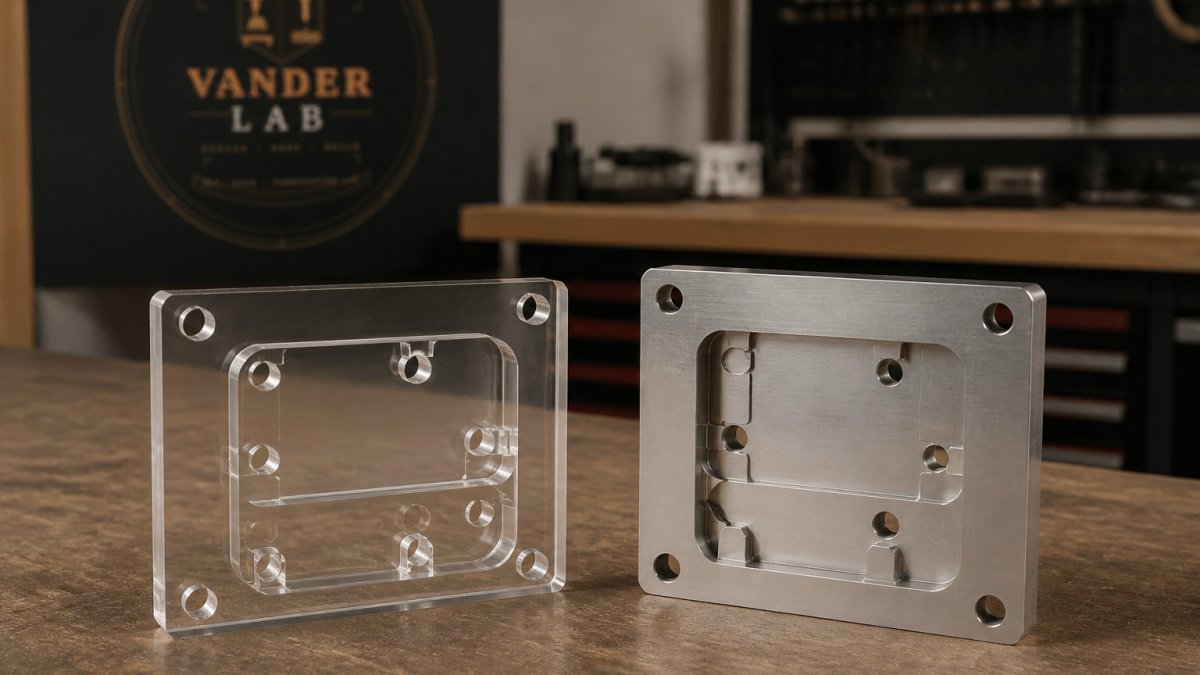
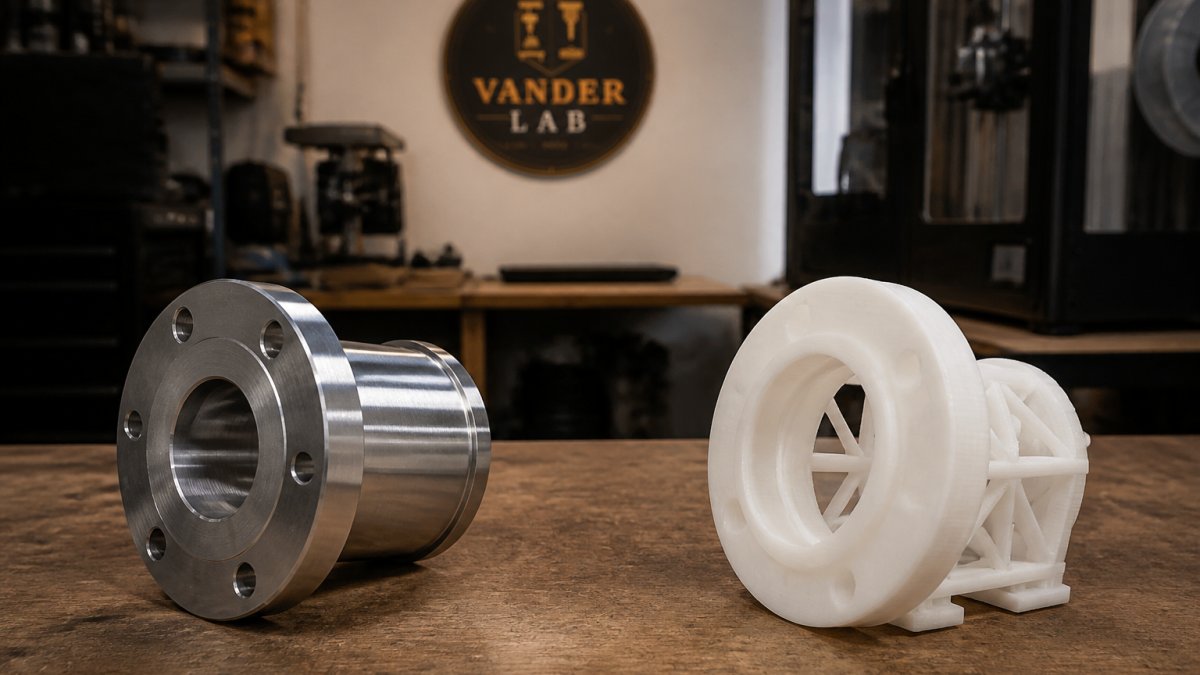
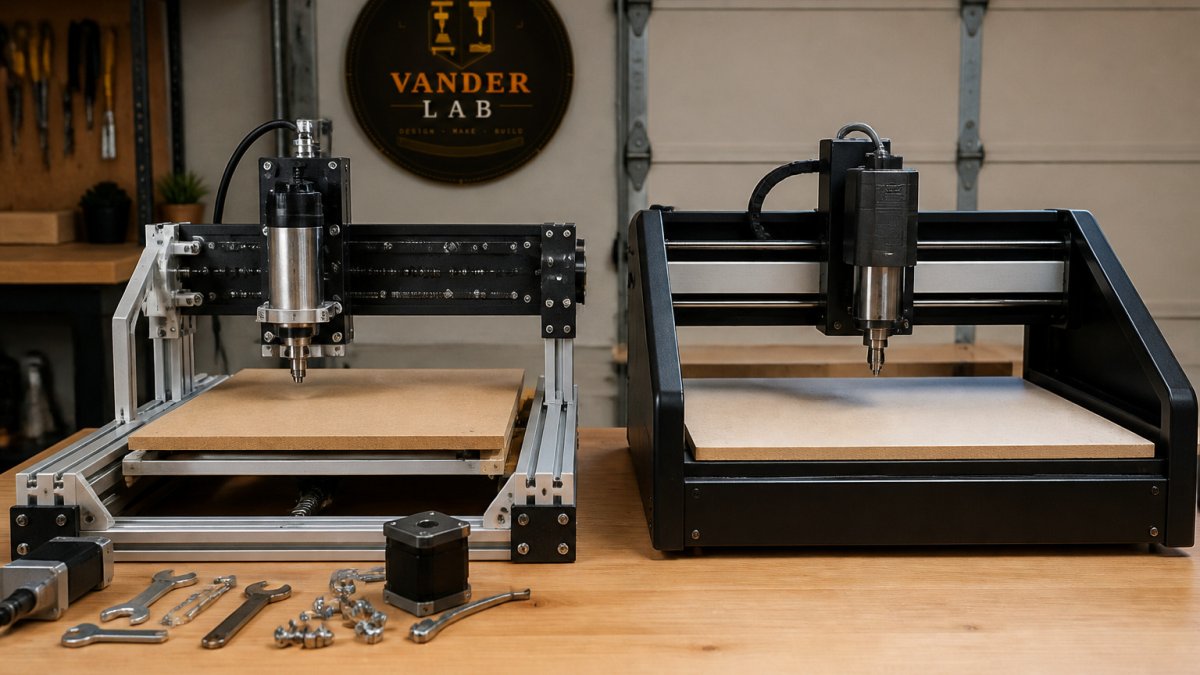
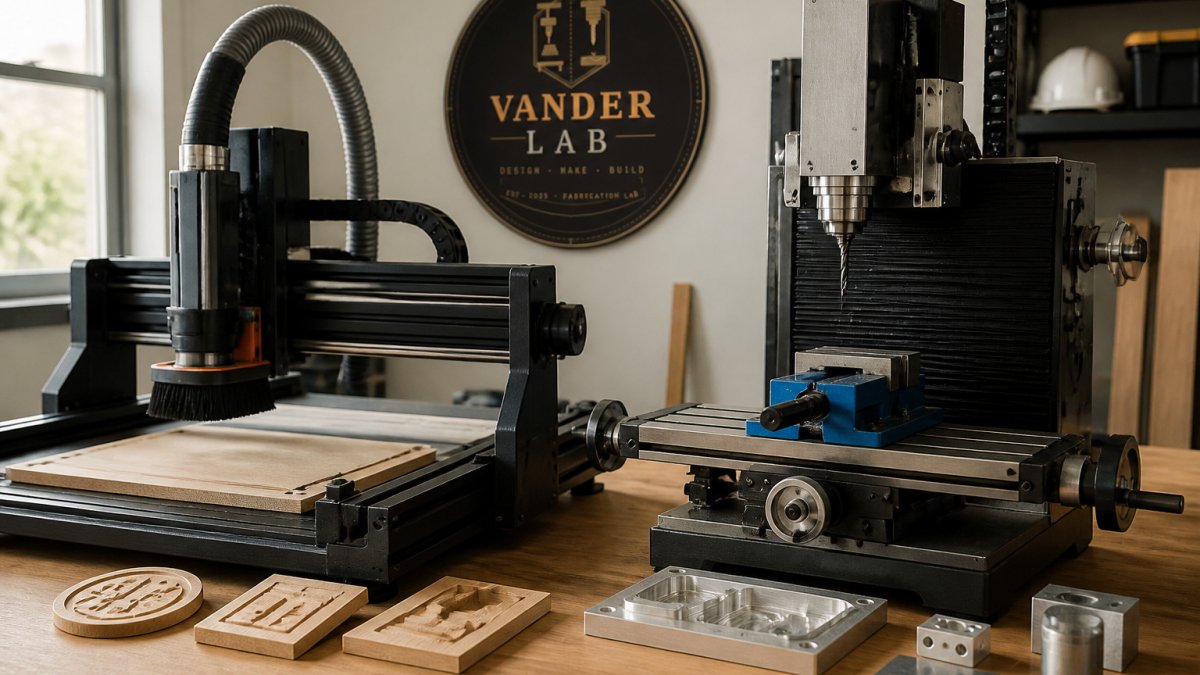
 comparison
Can You CNC Machine Wood and Metal? Router vs Mill
Last Updated: November 2, 2026
Quick Summary
A CNC machine built as a wood router can cut soft metals like aluminum at slow feed rates, but it struggles with steel. A CNC mill has the rigidity and spindle torque for harder metals. Match the machine to the material you cut most often.
- Frame rigidity is the main reason a wood router struggles with metal.
- Metal cutting needs more spindle torque and slower speeds than wood.
- Aluminum needs mist or minimum-quantity lubrication to prevent chip welding.
- Keep wood dust and metal chips separate for fire safety and contamination control.
- Retrofit a router for light metal work, or buy a mill for regular metal jobs.
Table of Contents
- Quick Answer: Can One CNC Machine Handle Both Wood and Metal?
- CNC Router vs CNC Mill: The Core Mechanical Differences
- Machining Aluminum on a Wood CNC: What Works and What Breaks
- CNC Spindle Speed for Wood vs Metal
- Tooling, Coolant, and Workholding Differences
- Safety and Cross-Contamination When Switching Materials
- Choosing the Right Machine for Your Projects in Mebane
- Frequently Asked Questions
Quick Answer: Can One CNC Machine Handle Both Wood and Metal?
Yes, but only within limits. Readers weighing local options can compare nearby custom wood routing services before deciding. A cnc machine built as a CNC router can cut soft metals like aluminum at slow feed rates, while a CNC mill is built to handle steel and harder alloys.
The answer depends on frame strength, spindle power, and setup. Below, where each machine type wins and where switching materials causes trouble.
CNC Router vs CNC Mill: The Core Mechanical Differences
A CNC router uses a lightweight gantry and a high-speed spindle to move through wood, plastics, and foam quickly. A CNC mill is heavier, more rigid, and runs slower spindles with more torque, which lets it remove metal without chatter.
The practical difference is cutting force. Metal resists the tool far more than wood, so a frame that handles a router bit can flex under a steel end mill, showing up as chatter marks, dimensional error, and broken tools.
Rigidity, Frame Structure, and Vibration Control
Rigidity is the main reason a wood router struggles with metal. Its frame, rails, and screws are sized for low cutting loads, so pushing aluminum through it builds vibration in the gantry and work surface.
Look for these signs that a machine lacks the rigidity for metal:
- Visible chatter marks or uneven surface finish on cuts
- Gantry movement or flex when you push the head by hand
- Loose or backlashing lead screws and ball screws
Vibration damping matters too: heavier frames absorb vibration, while thin aluminum frames transmit it into the cut.
Spindle Torque and Speed Range
Spindle torque decides whether a machine can push a tool through metal without stalling. Readers concerned about holding dimensions across materials can review how to ensure tight tolerances in machining.
Speed and torque should match the material. A router spindle fast enough for wood can overheat a small cutter in aluminum at the wrong feed rate, and many hobby-grade spindles lack the torque to hold depth in harder alloys.
Machining Aluminum on a Wood CNC: What Works and What Breaks
Aluminum is the most common metal people try on a wood CNC. It is soft enough for light work, but it still demands rigidity, proper tooling, and cooling.
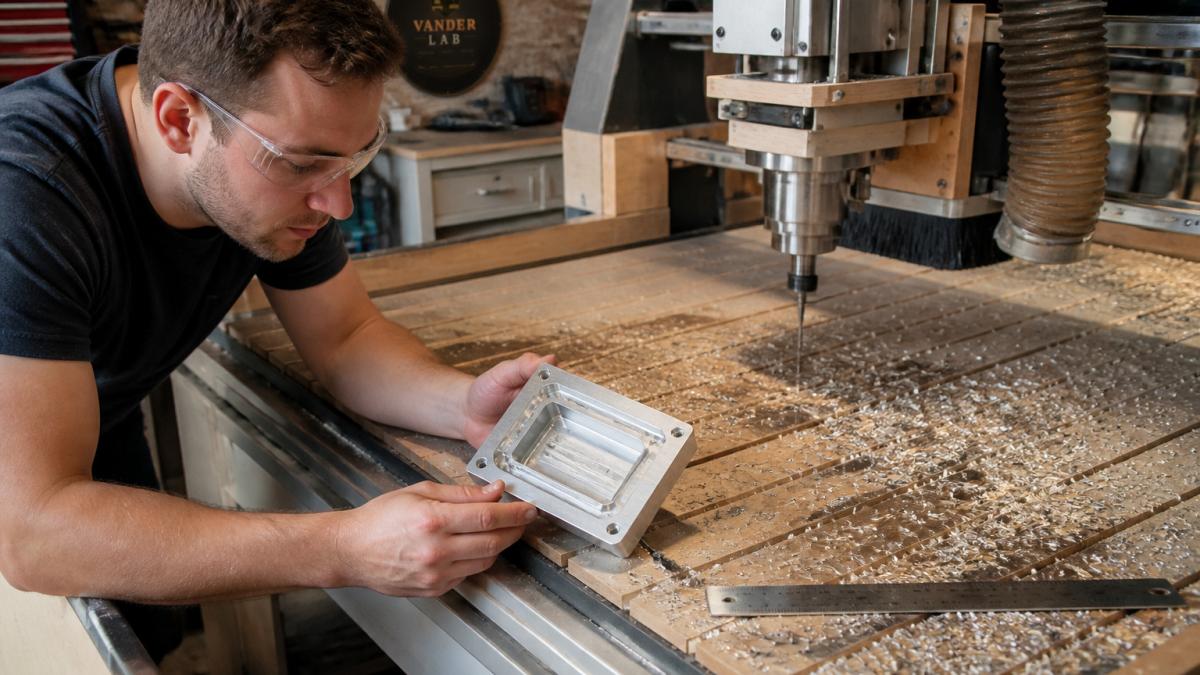
Light engraving and shallow pocketing in aluminum can work on a capable router at slow feed rates.
What tends to break:
- Deep cuts that overload the spindle
- Fast feed rates that cause tool breakage
- Chips packing into the cutter and welding to the workpiece
For parts that need tighter dimensions than a router can hold, custom metal fabrication services for small business is a route some shops consider, though that is a separate decision from buying a machine.
CNC Spindle Speed for Wood vs Metal
Spindle speed should be set by material and tool diameter, not habit. Wood usually runs at higher RPM than aluminum, and steel slower still. Using wood settings on metal is one of the fastest ways to burn out a cutter.
| Material | Typical Spindle Behavior | Main Risk |
|---|---|---|
| Softwood | Higher RPM, moderate feed | Burning, tear-out |
| Hardwood | Moderate RPM, slower feed | Heat, dust buildup |
| Aluminum | Lower RPM, controlled feed | Chip welding, chatter |
| Steel | Slow RPM, high torque | Tool breakage, frame stress |
These are relative guidelines, not fixed values. Check tool manufacturer charts and your machine's documented limits before setting speeds. CAM software can calculate tool paths, but spindle limits come from the hardware.
Tooling, Coolant, and Workholding Differences
Tooling is where many wood-router setups fail when switching to metal. Router bits are built for fast cutting in wood fiber: two flutes, open gullets, and geometry that clears large chips at high RPM. End mills for metal use different flute counts, coatings, and geometries because the cutting mechanics differ.
Router Bits vs End Mills: What Actually Changes
- Flute count. Wood router bits typically run one to three flutes with deep gullets to clear bulky chips. Aluminum end mills usually run two or three flutes; steel end mills often four or more. More flutes mean a smaller chip per revolution at the same feed, which changes your chip load math.
- Helix and rake angle. Metal end mills use sharper rake angles and tighter helixes to shear metal cleanly instead of scraping it. A wood bit pushed into aluminum tends to rub, heat up, and weld chips to the edge.
- Coating. Uncoated carbide works for wood. Aluminum-specific end mills often use a polished or zirconium-based coating to reduce built-up edge; steel tooling frequently uses TiAlN or AlTiN coatings that tolerate heat. A wood bit in aluminum strips its edge quickly because the geometry cannot evacuate chips.
Makers who run both materials commonly keep two separate tool sets and never cross them over. Wood dust packed into a metal end mill's flutes is a contamination source, and metal chips embedded in a wood bit's gullets scar wood surfaces.
Coolant and Lubrication: Mist, Flood, and Minimum Quantity
Coolant and lubrication matter for metal in a way they never do for wood. Aluminum chips pack and weld to the cutter without a lubricant or mist system, and steel needs more cooling still. Routers rarely include coolant systems, so metal work usually means adding one of three approaches:
- Mist or minimum-quantity lubrication (MQL). A small air-and-oil stream aimed at the cut zone. Common on hobby and light-production routers because it needs no flood tray or pump. It controls chip welding on aluminum well at light depths.
- Flood coolant. A pump and tray system that washes chips away and carries heat off. Effective, but it means liquid containment, a chip tray, and a machine that tolerates wet operation. Most wood routers are not built for it.
- Air blast alone. Sometimes enough for shallow aluminum cuts with a coated end mill and conservative feed, but it does nothing for lubrication and relies entirely on chip evacuation.
Watch out: oil-based mist and wood dust combine into a sticky paste that gums up rails, screws, and bearings, so a machine running both materials needs a cleaning routine between jobs.
Workholding: Vacuum, Clamps, and Fixturing
Workholding changes too. Wood can be held with clamps or a vacuum table because cutting forces are low. Metal needs rigid clamping that resists higher cutting forces, a loose clamp on aluminum can shift the part mid-cut and ruin the work.
- Vacuum tables work well for sheet goods and flat wood panels but lose grip on small metal parts with limited surface area.
- T-track and hold-down clamps are the practical default for metal on a router. Clamp close to the cut and check that the clamp clears the toolpath.
- Fixture plates and vise setups give the rigidity metal needs, but they eat Z height and require a spoilboard or table that can take the load.
Feed rates and chip load tie these together. Chip load is the thickness of material each flute removes per revolution; get it right and the cut stays stable, get it wrong and you get rubbing and heat or chipped flutes.
Safety and Cross-Contamination When Switching Materials
Running wood and metal on the same machine creates real hazards.
Sienci Labs notes that safety protocols must strictly separate metal dust and chips from wood dust to prevent fire and contamination hazards (Sienci Resources safety fundamentals).
Oil-based coolants used for metalwork can also cause trouble on a machine that cuts wood. Plan separate cleanup routines, separate dust collection, and dedicated tooling for each material.
Choosing the Right Machine for Your Projects in Mebane
The honest answer to "which machine" depends less on brand names and more on three questions: what material you cut most, how hard that material is, and whether you need production tolerances or just a good-looking part. Most practitioners choose the machine for the material that pays the bills, treating the second material as an occasional job.
A Material Compatibility Matrix for Wood-Grade CNCs
Not all metals are equal on a router. The table below is a practical starting point for a rigid hobby or light-production router with a real spindle and a mist system.
| Material | Viability on a Wood-Grade CNC | Main Constraint |
|---|---|---|
| Softwood, hardwood, MDF, plywood | Excellent | Dust collection, feed and speed |
| Plastics and acrylic | Excellent | Melting, chip welding at high RPM |
| Engraving brass and aluminum | Good at shallow depth | Tool wear, chip evacuation |
| Aluminum plate, shallow pocketing | Workable with mist and slow feed | Rigidity, chip welding |
| Brass and copper, light cuts | Marginal | Built-up edge, tool wear |
| Mild steel | Not recommended on a router | Spindle torque, rigidity, heat |
| Stainless and tool steel | No | Requires a true mill |
The pattern is clear: the softer the metal and the shallower the cut, the more likely a router can handle it. Steel is where the line is drawn, because it needs torque and rigidity a gantry router does not have.
Retrofitting a Wood CNC vs Buying a Dedicated Mill
This is the decision most articles skip. There are two paths, and they trade off differently:
- Retrofit the router. Add a mist system, a rigid fixture plate, metal-specific end mills, and a spindle with more torque if the current one stalls. This keeps one machine and one footprint, but it does not fix frame flex, and the router will still be limited to light cuts in soft metals.
- Buy a dedicated entry-level mill. A benchtop mill or small CNC mill trades work envelope for rigidity and torque. It handles steel and harder alloys a router cannot, but it is slower in wood and usually has a smaller table.
A common pattern is to retrofit first if metal is a small share of the work, and buy a mill once metal becomes a regular job. Anyone weighing that purchase can review building vs buying a CNC router costs before committing. The retrofit path is cheaper up front but caps out; the mill path costs more but removes the ceiling.
What to Verify Before You Buy
If your work is mostly wood, a dedicated CNC router is the practical choice.
If your work is mostly metal, a CNC mill or a machine with documented metal-cutting specs is the safer route.
Before committing, ask the manufacturer four questions: what is the maximum depth of cut in aluminum, what spindle torque is available at low RPM, whether the frame is designed for cutting loads or only engraving loads, and whether a mist or flood system is supported. A machine that cannot answer those questions in writing is not a metal machine, regardless of what the marketing says.
Shops that need occasional metal parts can also look at precision CNC routing services near me style outsourcing, or use local custom services.
Our recommendation: if you need precision parts in metal at production volume, hire the work out or buy a true mill.
For custom fabrication, engraving, or signage projects, VanderLab in Mebane can take your sketch, photo, or rough idea and turn it into a finished part. Request a custom quote through the Custom Quotes page.
Frequently Asked Questions
Can a CNC machine cut wood and metal?
Yes, many CNC machines can cut both, but the results depend on the machine. A wood CNC router is built for lighter cutting and high feed rates, so it handles softwoods, hardwoods, plywood, acrylic, and soft non-ferrous metals such as aluminum and brass when cutting shallow passes at slow feed rates. Harder steels and deep metal cuts generally need a rigid metal mill with heavier frames, higher-torque spindles, and coolant. Check your machine's rated materials and frame stiffness before cutting metal, and start with conservative depths of cut.
What metals can a CNC machine cut?
Soft non-ferrous metals such as aluminum, brass, and copper are the most common choices for entry-level wood CNC routers, usually as light engraving or shallow profiling. Mild steel and harder alloys typically require a metal mill with a rigid frame, a stronger spindle, and a coolant or lubrication system to manage heat and chips. The material hardness and the depth of cut are the two factors that most determine whether a given machine can handle a metal safely.
What is the difference between a CNC router and a CNC mill?
A CNC router is generally lighter, faster, and designed for large-format work in wood, plastics, and foam, with a larger work area relative to its frame. A CNC mill is heavier and more rigid, built to hold tight tolerances in metal with slower feed rates and more powerful spindles. Routers prioritize speed and reach, while mills prioritize stiffness and precision under heavier cutting loads.