 listicle
Best 3D Printing Materials for Outdoor Signage
Table of Contents
- Why Material Choice Matters for Outdoor Signs
- Material Comparison Table
- ASA: The Top Choice for UV Resistant 3D Printing Filament
- ASA vs PETG for Outdoor Signs: Performance and Trade-Offs
- Waterproof 3D Printing Filament Options Beyond ASA
- 3D Printed Outdoor Sign Durability: What to Expect
- Print Settings, Finishing, and Installation for Long-Term Performance
- Choosing the Right Material for Your Sign
- Frequently Asked Questions
Last Updated: October 12, 2026
Why Material Choice Matters for Outdoor Signs
When you're designing a sign that will face sun, rain, temperature swings, and wind exposure, the material you choose determines whether it lasts five years or five months. This is where the best 3D printing materials for outdoor signage separate themselves from the rest. Most makers assume any filament will work fine outdoors. It won't. Standard PLA degrades quickly under UV light. The materials that actually perform, ASA, PETG, and a few specialized alternatives, share one thing in common: they're built to handle what the weather throws at them.
At VanderLab, we've worked with custom signage projects for local businesses and organizations. The difference between a sign that looks crisp after a year and one that's faded and brittle comes down to material selection and how you prepare it for outdoor life. Below, we'll walk you through the materials that work, why they work, and exactly how to choose the right one for your specific climate and use case.
Material Comparison Table
| Material | Best For | UV Resistance | Heat Stability | Moisture Resistance | Ease of Printing |
|---|---|---|---|---|---|
| ASA | General outdoor signs, high-detail work | Excellent | Excellent | Very good | Moderate |
| PETG | Cold climates, moderate sun | Very good | Good | Very good | Easy |
| Polycarbonate | Impact-prone areas, flexible needs | Good | Excellent | Good | Challenging |
| Nylon | Flexible sign components, high-impact areas | Good | Good | Excellent | Difficult |
| UV-stabilized PLA | Budget-conscious projects, limited outdoor exposure | Moderate | Fair | Good | Very easy |
| TPU | Flexible sign elements, protective trim | Fair | Fair | Excellent | Difficult |
ASA: The Top Choice for UV Resistant 3D Printing Filament
ASA stands as the industry standard for outdoor signage because it delivers across all the factors that matter. UV resistance is built in, the material resists fading and degradation from prolonged sun exposure. Heat stability keeps it from warping in direct sunlight. Moisture doesn't break it down the way it does with standard PLA.
Multiple material guides identify ASA as the best choice for outdoor work. The consistency across sources reflects real-world performance. Signs printed in ASA hold their color, maintain dimensional accuracy, and resist the brittleness that comes from UV exposure.
The trade-off: ASA requires more careful print settings than PLA. The learning curve is real, but the results justify it.
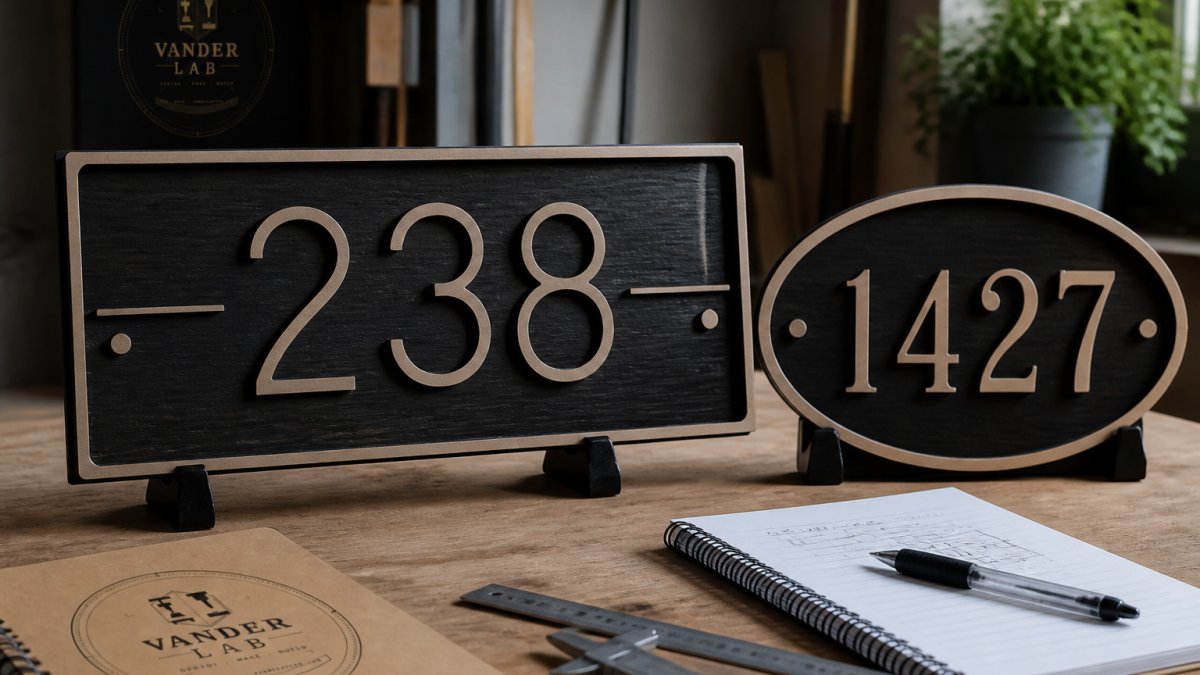
For custom signage work, ASA is what we reach for when durability matters most. Whether it's an address sign that needs to last a decade or a wayfinding marker for a local event, ASA performs.
ASA vs PETG for Outdoor Signs: Performance and Trade-Offs
ASA vs PETG for outdoor signs comes down to climate and compromise. Both materials handle outdoor exposure better than standard filaments, but they excel in different conditions.
PETG shines in cold climates and situations with moderate sun exposure. If you're in a region where winter temperatures drop and summer sun is moderate, PETG delivers solid performance with less hassle.
ASA pulls ahead in hot climates and high-UV environments. It resists fading more aggressively. It maintains rigidity in sustained heat. If your sign faces intense, unobstructed sun for eight-plus hours daily, ASA is the safer choice.
The moisture resistance is nearly identical between the two. Both handle rain and humidity well. The real difference is UV exposure intensity and ambient temperature range.
One practical consideration: PETG is easier to dial in on most printers. If you're running a production batch of signs and cost per unit matters, PETG can make sense. If longevity and color retention are the priority, ASA wins.
Waterproof 3D Printing Filament Options Beyond ASA
When people ask about waterproof 3D printing filament, they're usually thinking about rain resistance. All the materials we're discussing, ASA and PETG, handle water exposure. The question isn't whether they stay waterproof; it's how they respond to sustained moisture over months or years.
3D Printed Outdoor Sign Durability: What to Expect
Most outdoor-printing guides stop at "ASA lasts longer than PLA." That's not useful when you're deciding what to hang on a post for the next decade. What actually matters is how each material fails, how fast it fails in a given climate, and which failure mode will hit your sign first. Here's the honest breakdown.
How each material actually fails outdoors
- ASA fails by gradual chalking and color shift, not by cracking. The surface oxidizes under UV, the pigment fades, and the part slowly loses gloss. Structurally it holds up far longer than the surface suggests. A sign that looks tired at year four is often still dimensionally sound at year ten.
- PETG fails by stress cracking at loaded points, screw holes, thin bosses, and anywhere the part is under constant tension. UV accelerates this. A PETG sign with undersized mounting holes can crack at the fastener long before the surface fades.
- Polycarbonate fails by yellowing and, in sustained UV, by surface embrittlement. It stays tough in impact but loses clarity and color fidelity faster than ASA.
- Nylon fails by creep, it slowly deforms under constant load, especially in heat. A nylon bracket that holds fine in winter can sag by August. Moisture uptake before printing makes this worse.
- UV-stabilized PLA fails by embrittlement first, then by layer delamination. It goes from flexible to brittle in a single hot season in full sun.
- TPU fails by color bleed and surface tackiness. It stays flexible but becomes cosmetically unacceptable for signage.
Realistic service life by climate
These are practitioner ranges, not lab guarantees, actual life depends heavily on print orientation, wall thickness, and finishing.
| Climate pattern | ASA | PETG | Polycarbonate | Nylon | UV-stabilized PLA |
|---|---|---|---|---|---|
| Full sun, hot summers, mild winters | 7-12 yrs | 4-6 yrs | 6-9 yrs | 5-7 yrs | 1-2 yrs |
| Full sun, cold winters, freeze-thaw cycles | 8-12 yrs | 5-7 yrs | 6-9 yrs | 4-6 yrs | 1-2 yrs |
| Coastal humidity and salt spray | 6-9 yrs | 4-6 yrs | 5-7 yrs | 4-6 yrs | <1 yr |
| Partial shade, sheltered mounting | 12+ yrs | 8-10 yrs | 10+ yrs | 8-10 yrs | 2-4 yrs |
A few patterns worth internalizing:
- Freeze-thaw is harder on PETG than on ASA. Water that wicks into micro-gaps between layers expands when it freezes. ASA's lower moisture uptake and higher layer-bond strength tolerate this better.
- Coastal salt spray shortens every material's life by roughly a third compared to a neutral inland climate. Salt deposits hold moisture against the surface and accelerate both UV chalking and fastener corrosion.
- Partial shade can double service life. A sign under an eave or on a north-facing wall sees a fraction of the UV dose of one in full southern exposure.
The failure modes that actually kill signs
Material choice sets the ceiling. These four factors decide whether you reach it:
- UV dose. Cumulative, not peak. A sign facing south in full sun receives roughly twice the annual UV of the same sign facing north. Orientation matters as much as filament.
- Thermal cycling. Every expansion-contraction cycle works the layer bonds. Signs that see 40°F+ daily swings age faster than signs in stable climates, regardless of material.
- Moisture pooling. Water trapped against the sign, behind a flush-mounted bracket, in an upward-facing pocket, or in an unsealed screw hole, is the single most common cause of premature failure. It drives freeze-thaw damage, mildew staining, and fastener corrosion simultaneously.
- Mechanical fatigue. A sign that flexes in the wind fatigues at its mounting points. Rigid mounting beats flexible mounting for longevity, even when the flexible option is easier to install.
What this means for material choice
If you want the longest service life with the least fuss, ASA is the default. If your sign lives in a coastal or high-humidity area, plan on a shorter replacement cycle or step up to a protective coating. If your sign is sheltered, you have far more latitude.
For custom signage work, we size the material to the exposure, not the other way around. An address sign on a shaded porch and a trail marker in open sun are different problems, even when they look the same on paper.
Print Settings, Finishing, and Installation for Long-Term Performance
The filament is the raw material. The print is the sign. Two signs printed from the same spool of ASA can differ in outdoor life by years depending on how they were oriented on the bed, how thick the walls are, and how they're mounted. This section covers the decisions that actually move the needle.
Print settings that matter for outdoor parts
Start with the material's baseline, then adjust for the fact that outdoor signs are structural parts, not display models.
- ASA: nozzle 240-260°C, bed 100-110°C, chamber enclosure strongly recommended. Cooling fan at 0-20%. Wall speed 30-45 mm/s. Layer height 0.2 mm is a good balance of strength and finish for signage.
- PETG: nozzle 230-250°C, bed 70-85°C. Cooling fan 30-50%. Wall speed 40-60 mm/s. PETG bonds well but is prone to stringing, dry the filament first.
- Polycarbonate: nozzle 270-310°C, bed 110-120°C, enclosure required. Cooling fan off or minimal. Slow walls (25-40 mm/s) for layer adhesion.
- Nylon: nozzle 250-280°C, bed 70-90°C, enclosure required, and the filament must be dried immediately before printing. Nylon absorbs moisture from the air within hours.
- UV-stabilized PLA: nozzle 200-220°C, bed 50-60°C. Standard PLA settings apply; the difference is in the additive package, not the print profile.
Layer orientation: the single biggest structural decision
FDM parts are weakest between layers. A sign printed flat on the bed has its layer lines running parallel to the sign face, which means the part is strong against face-on loads but weak against anything that tries to peel or bend it along the layer stack.
For outdoor signs, the rule is simple: orient the part so that the primary load path crosses layer lines rather than running parallel to them. For a flat sign, that usually means printing it standing up (vertical) rather than flat, so that wind loads and mounting stresses are carried across layers instead of along them. The trade-off is a rougher face finish and longer print times, which is where finishing comes in.
For signs with mounting bosses or brackets, orient so the boss is printed as part of a continuous wall rather than as a separate feature that shears off under load.
Walls, infill, and nozzle size
- Wall count: 4-6 perimeters minimum for outdoor signs. Walls carry the load; infill mostly holds the shape. A sign with 2 walls and 40% infill is weaker than the same sign with 5 walls and 15% infill.
- Infill: 15-25% is plenty for flat signs. Higher infill adds weight and print time without meaningfully improving weather resistance. Use gyroid or cubic patterns for uniform strength.
- Nozzle size: a 0.6 mm nozzle is a good default for outdoor signage. It lays down thicker, stronger walls, prints faster, and produces fewer layer lines to trap moisture. Reserve 0.4 mm for fine text and detail work.
- Top and bottom layers: 5-6 solid layers top and bottom. These are the surfaces that face the weather.
Finishing: what actually helps and what doesn't
- Sand progressively. 120-grit, then 220, then 400 if you want a smooth finish. Sanding removes the layer-line valleys where water pools and UV damage concentrates.
- Fill gaps if needed. A light application of UV-stable epoxy or automotive filler over deep layer lines prevents moisture ingress at the weakest points.
- Prime before painting. Most filaments don't hold paint well without a primer. A plastic-specific primer (often labeled for automotive or polypropylene use) gives the topcoat something to bond to.
- Topcoat with UV-resistant paint or clear coat. Acrylic or polyurethane clear coats add a sacrificial UV barrier. On ASA this is optional insurance; on PETG, polycarbonate, and UV-stabilized PLA it's close to mandatory for multi-year exposure.
- Seal the edges and mounting holes. A thin bead of exterior-grade silicone around fasteners and along the base of the sign prevents water from wicking behind it.
Mounting and wind loading
This is where most outdoor 3D-printed signs actually fail, not in the material, but at the connection to the wall, post, or bracket.
- Hole placement: drill mounting holes at least 1.5× the hole diameter away from any edge. Holes closer than that concentrate stress and crack under wind load.
- Hole size: oversize holes slightly (0.5-1 mm larger than the fastener) to allow for thermal expansion. A tight hole in a material that expands in summer will crack at the fastener.
- Fasteners: stainless steel or coated hardware only. Standard steel rusts, stains the sign, and eventually fails.
- Standoffs: use metal or plastic standoffs to hold the sign off the mounting surface. This lets air circulate behind the sign, prevents moisture pooling, and dramatically reduces the freeze-thaw damage that kills flush-mounted signs.
- Wind loading: a flat sign acts like a sail. For signs larger than roughly a square foot in an exposed location, plan for wind loads of 15-20 psf (typical residential building code assumption in many U.S. jurisdictions) and size the mounting hardware accordingly. When in doubt, add a second mounting point rather than a larger fastener.
- Sign thickness: 4-6 mm minimum for signs up to about 12 inches wide. Larger signs need either thicker walls, a backing frame, or both.
Putting it together
A sign that lasts is the product of four decisions made in order: pick a material suited to the climate, orient the print so loads cross layers, finish the surface so it sheds water and UV, and mount it so it can breathe and flex without cracking. Skip any one of those and the others have to work harder. Get all four right and even a modest filament can hold up for years.
If you'd rather not work through all of this yourself, that's exactly the kind of thing we help with. VanderLab builds custom signage in Mebane, and we're happy to talk through material, print orientation, and mounting for your specific location and exposure. Reach out for a custom quote.
Choosing the Right Material for Your Sign
Start by answering three questions: How much direct sun will the sign face? What's the temperature range in your area? Will the sign face physical impact or just weather?
Full sun, hot climate, no impact: Choose ASA. It's the safest choice for maximum durability.
Moderate sun, cold climate, no impact: PETG works well and prints easier than ASA.
Coastal or high-humidity area: ASA with a protective coating.
High-impact area (posts, high-traffic zones): Both resist physical damage better than ASA.
Sheltered location (under eave, covered area): It won't outlast ASA, but it'll perform adequately in protected settings.
The best 3D printing materials for outdoor signage aren't one-size-fits-all. They're chosen for specific conditions. ASA is the default for most outdoor work because it handles many conditions well. But PETG has legitimate advantages in specific scenarios.
When you're ready to move from planning to printing, we can help. VanderLab works with makers and businesses who need custom signs that last. Whether you're designing from scratch or refining an existing concept, we can advise on material selection that maximizes durability. If you have questions about your specific project, reach out for a custom quote, or browse our available work and materials on our eBay Shop.
Frequently Asked Questions
Is PETG or ASA better for outdoor 3D-printed signs?
ASA is the stronger choice for outdoor signs exposed to intense sunlight and heat. It resists UV degradation and thermal warping better than PETG. PETG works well for signs in cooler climates or areas with moderate sun exposure. ASA costs more and requires higher print temperatures, but the improved durability justifies the trade-off for permanent outdoor installations.
What are some waterproof 3D printing filament options for signage?
ASA and PETG are primary waterproof options for 3D-printed outdoor signs. UV-stabilized PLA offers water resistance for short-term outdoor use but degrades faster in direct sunlight than ASA or PETG.
How long will a 3D-printed outdoor sign last?
ASA signs can last 5-10 years or longer outdoors with proper finishing and mounting. PETG typically lasts 3-5 years in moderate conditions. Durability depends on climate, sun exposure, print quality, protective coatings, and maintenance. Signs in harsh UV or extreme temperature environments degrade faster. Proper installation that minimizes wind stress and water pooling extends service life significantly.
What is the best filament for outdoor address signs?
ASA is the best choice for address signs that need to remain legible and intact for years. Its UV resistance keeps colors from fading, and its thermal stability prevents warping. High-detail printing with ASA preserves crisp address numbers and lettering. PETG works for moderate climates but may yellow or warp over time.
Choosing the right material for outdoor signage means balancing durability, cost, and printability. ASA delivers the best overall performance for most situations. But understanding the trade-offs, easier printing with PETG, superior moisture resistance with nylon, impact resistance with polycarbonate, helps you make the decision that fits your specific climate and use case. The signs that last are the ones built with intention, using materials matched to their environment.