 comparison
Xometry Alternative for Custom Metal Parts: 4 Options
Table of Contents
- Comparing Xometry Alternatives for Custom Metal Parts
- Fictiv: Managed Quality for Complex Projects
- SendCutSend: Fast, Affordable Sheet Metal
- MakerVerse: Engineering-Led Production Partner
- Haizol: Global RFQ Marketplace for Custom Parts
- How to Choose a Metal Fabrication Partner
- Step 1: Define Your Tolerance and Finish Requirements
- Step 2: Match Process Capability to Part Geometry
- Step 3: Evaluate Material Availability
- Step 4: Assess Quoting Transparency and Speed
- Step 5: Verify Quality Systems and Certifications
- Step 6: Compare Total Cost, Not Just Unit Price
- Step 7: Test With a Pilot Order
- When Small-Batch Metal Manufacturing Makes Sense
- Which Alternative Fits Your Project?
- Frequently Asked Questions
Last Updated: September 6, 2026
Comparing Xometry Alternatives for Custom Metal Parts
When your project needs custom metal parts, the quoting process often feels like the hardest part. Xometry popularized the instant-quote marketplace model, but it is not the only path to a finished machined part. Finding the right xometry alternative comes down to how much engineering support you need, how fast you need parts, and whether you want a managed partner or a self-serve marketplace.
For designers and engineers evaluating options, the trade-off is consistent: marketplaces offer broad capacity and competitive pricing, while managed platforms offer tighter quality control and technical oversight. This guide breaks down four alternatives across those lines so you can match a provider to your specific tolerances and volume.
Fictiv: Managed Quality for Complex Projects
Fictiv operates as a digital manufacturing platform connecting buyers to a vetted network of manufacturing partners. It is the strongest choice when your parts require rigorous quality assurance and you want a team managing the supply chain on your behalf.
Fictiv’s key advantage is its quality management system. The platform uses an AI-driven quoting engine for instant pricing and lead time estimates, then routes work through partners that have passed its vetting process. For complex projects with tight tolerance specifications, Fictiv provides dedicated engineering support to review design for manufacturability (DFM) before production begins.
The trade-off is cost. Because Fictiv manages quality and technical oversight across a distributed network, pricing runs higher than going direct to a factory. Teams that need scalable capacity without sacrificing technical support will find the premium worth it.
SendCutSend: Fast, Affordable Sheet Metal
SendCutSend focuses on a narrower slice of manufacturing: laser cutting, CNC routing, and bending for sheet metal. If your part is flat or requires simple bends, this is often the fastest and most affordable route.
The platform excels at instant online quoting with transparent pricing and no minimum order quantities. You upload a CAD file, pick from a wide selection of metal alloys and thicknesses, and get a price immediately. Turnaround times are quick, making it a strong fit for rapid prototyping and small-batch production.
SendCutSend’s limitation is process depth. It does not offer complex 3D machining or multi-axis CNC work, so parts requiring milled features, threads, or tight internal geometries fall outside its capabilities. For brackets, enclosures, and flat patterns, it is hard to beat.
MakerVerse: Engineering-Led Production Partner
MakerVerse positions itself as an engineering-led manufacturing platform with access to a broad network of production capabilities. It suits companies that want technical guidance and flexible capacity across CNC machining, 3D printing, and injection molding.
What distinguishes MakerVerse is the integrated engineering support. Rather than simply routing your CAD file to the nearest available machine, the platform reviews your part design and can suggest optimizations before you commit to production. This reduces the risk of costly errors and helps you move from prototype to production with fewer iterations.
Pricing varies significantly based on project complexity and material choice, so budget-conscious teams should request quotes from multiple providers. MakerVerse is best for engineers who value a consultative relationship and need a partner that scales from prototype to batch production.
Haizol: Global RFQ Marketplace for Custom Parts
Haizol operates as a B2B marketplace connecting buyers with verified manufacturing suppliers, primarily across global markets. It is the right alternative when you want competitive pricing through an RFQ bidding model.
You submit a request for quote, and multiple verified suppliers respond with pricing and lead times. This marketplace model gives you access to a vast pool of manufacturing capacity, and the bidding dynamic often drives costs down. Haizol supports various processes including CNC machining and molding, and the platform manages communication and project tracking.
The main drawback is variability. Because you are working with individual suppliers, communication quality and lead times depend on the specific shop selected. Vendor vetting helps, but it does not guarantee the consistency of a managed platform. For businesses comfortable managing suppliers directly, Haizol offers compelling value.
How to Choose a Metal Fabrication Partner
Selecting between these options starts with defining your project's critical requirements. Every platform has strengths, but the right fit depends on your tolerance specifications, volume, and timeline.
Step 1: Define Your Tolerance and Finish Requirements
Before comparing providers, document your part's critical dimensions. CNC machining typically holds tolerances of ±0.005 inches for standard work, with precision shops capable of ±0.002 inches or tighter (cnccookbook.com). Sheet metal laser cutting generally achieves ±0.005 inches on flat patterns, while bending introduces angular tolerances around ±1 degree (thefabricator.com). If your design requires tight internal geometries, threaded holes, or surface finishes below 32 microinches Ra, filter out providers that cannot commit to those specifications in writing.
Step 2: Match Process Capability to Part Geometry
Each platform specializes in different manufacturing processes. Flat parts with simple bends belong on laser cutting and press brake services. Parts requiring milled features, pockets, or multi-axis contouring need CNC machining. Complex geometries with internal channels may require electrical discharge machining (EDM) or additive methods followed by post-machining. Review each provider's process list against your part's feature set before requesting a quote.
Step 3: Evaluate Material Availability
Custom metal parts span a wide range of alloys. Common options include 6061 and 7075 aluminum, 304 and 316 stainless steel, 1018 and 4140 steel, brass, copper, and titanium. Some platforms stock only common alloys in standard thicknesses, while others can source specialty materials on request. If your application demands certifications like ASTM or AMS standards, verify the provider can supply material certificates.
Step 4: Assess Quoting Transparency and Speed
Instant quoting engines provide immediate pricing based on your CAD file, but they may not account for every design nuance. RFQ-based platforms require more time but allow suppliers to review manufacturability before pricing. A platform with integrated DFM feedback during quoting can save days compared to discovering issues after order placement.
Step 5: Verify Quality Systems and Certifications
For production runs, quality control matters as much as the machining itself. Ask whether the provider performs first article inspection, what measurement equipment they use, and whether they provide inspection reports with shipments. ISO 9001 certification indicates a documented quality management system, while AS9100 is relevant for aerospace applications. If your industry requires traceability, confirm the provider maintains batch records and material certifications.
Step 6: Compare Total Cost, Not Just Unit Price
Unit price tells only part of the story. Factor in setup fees, finishing costs, packaging, and shipping. A provider with a slightly higher unit price but faster turnaround may reduce your overall project cost. For small-batch runs, minimum order quantities and setup amortization significantly affect per-part pricing. Request itemized quotes so you can compare apples to apples.
Step 7: Test With a Pilot Order
Before committing to a large production run, order a small pilot batch. This validates the provider's communication quality, adherence to specifications, and delivery reliability. A pilot order also reveals how the platform handles design changes or quality issues when they arise. A single pilot run prevents far larger problems downstream.
| Provider | Best For | Key Strength | Main Limitation |
|---|---|---|---|
| Fictiv | Complex, high-tolerance parts | Managed quality and engineering support | Higher cost |
| SendCutSend | Flat and bent sheet metal | Fast turnaround, transparent pricing | No complex 3D machining |
| MakerVerse | Prototype to production | Engineering-led DFM guidance | Variable pricing |
| Haizol | Cost-sensitive global sourcing | Competitive RFQ bidding | Inconsistent supplier quality |
A common mistake is choosing a provider based on price alone, then discovering the shop lacks the surface finishing or tolerance capabilities your design requires. Start with your technical specifications, then filter by process capability before comparing cost-per-part. For projects with tight deadlines, verify lead time commitments in writing.
When Small-Batch Metal Manufacturing Makes Sense
Small-batch metal manufacturing bridges the gap between a single prototype and full-scale production. It makes sense when you need functional parts for field testing, limited production runs for a product launch, or replacement components for existing equipment. But the value extends beyond the parts themselves, it includes the secondary services and supply chain advantages that most online marketplaces do not advertise.
Post-Production Support: The Missing Layer
Most comparison articles stop at the quote-to-part journey. In practice, complex projects rarely end when parts leave the machine. Secondary operations often determine whether a part is usable. Deburring, anodizing, powder coating, bead blasting, and passivation are common finishing steps that protect metal parts from corrosion and wear. Assembly services, pressing inserts, installing hardware, or joining subcomponents, save your team hours of manual labor. Kitting, where a provider packages related parts together with labeled documentation, simplifies inventory management and final assembly.
When evaluating a small-batch partner, ask directly which post-production services they offer in-house versus which they outsource. A provider that handles finishing and light assembly internally reduces shipping costs and lead times compared to one that sends parts to a separate finisher. For prototypes and low-volume runs, this consolidation is often the difference between a two-week and a six-week timeline.
Design Iteration Speed: The Local Advantage
Working with a local fabricator for small-batch runs offers advantages that global marketplaces cannot match. Direct communication with the person running the machine means design iterations happen in hours, not days. Material selection conversations happen in real time. And when a part needs adjustment, the feedback loop is immediate.
A local partner can also catch manufacturability issues during a conversation before you ever generate a formal drawing. Describing a part's function often reveals design simplifications that reduce cost without sacrificing performance. This collaborative dynamic is rare with self-serve quoting platforms, where the CAD file is the only communication channel.
Supply Chain Resilience and Geographic Proximity
Domestic small-batch manufacturing shortens your supply chain and reduces exposure to overseas shipping delays. When a production line goes down waiting for a replacement part, proximity matters. A local fabricator can often deliver a critical component within days, while an overseas shipment might take weeks including customs clearance.
Data Security and IP Protection Considerations
Uploading CAD files to a public marketplace carries inherent IP risk. Most platforms store your designs on their servers and share them with vetted manufacturing partners, but the chain of custody is longer than working directly with a single shop. For proprietary designs, a local fabricator offers a simpler data trail, your file goes to one shop, not a distributed network. Ask any provider about their data handling policies, whether they sign NDAs, and how they store and delete your files after production.
When Small-Batch Does Not Make Sense
Small-batch manufacturing is not always the right answer. If you need thousands of identical parts with tight statistical process control, high-volume production lines with automated inspection may serve you better. If your design is still changing daily, a rapid prototyping service with same-day turnaround might be more appropriate. And if cost-per-part is your only metric, overseas sourcing will almost always win on unit price, though you absorb the risks of longer lead times, communication gaps, and quality variability.
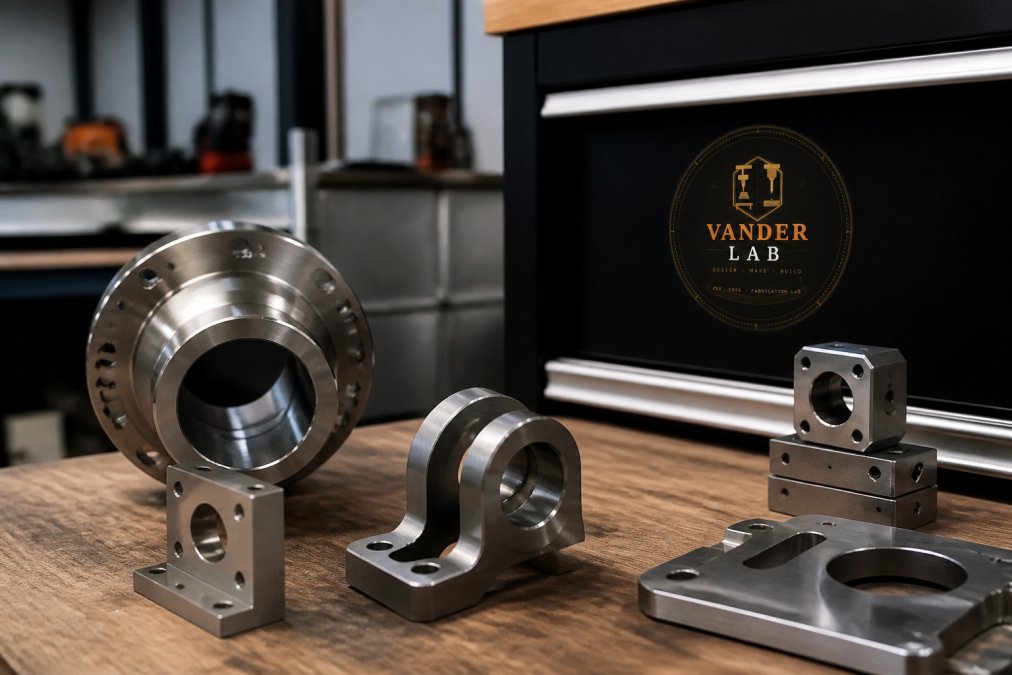
Whether you need a production run of specialized components or a one-off replacement part, a local shop provides the personal oversight that keeps quality consistent across every unit. For smaller quantities or unique geometries that fall outside the standard capabilities of the platforms above, custom fabrication can be a practical avenue for sourcing individual or low-volume metal parts. VanderLab offers custom fabrication through its Ebay Shop.
Which Alternative Fits Your Project?
The right xometry alternative depends on your project’s complexity, volume, and your tolerance for managing suppliers. Fictiv suits teams that want managed quality control. SendCutSend wins on speed and price for sheet metal. MakerVerse provides engineering depth for complex designs. Haizol maximizes cost savings through global bidding.
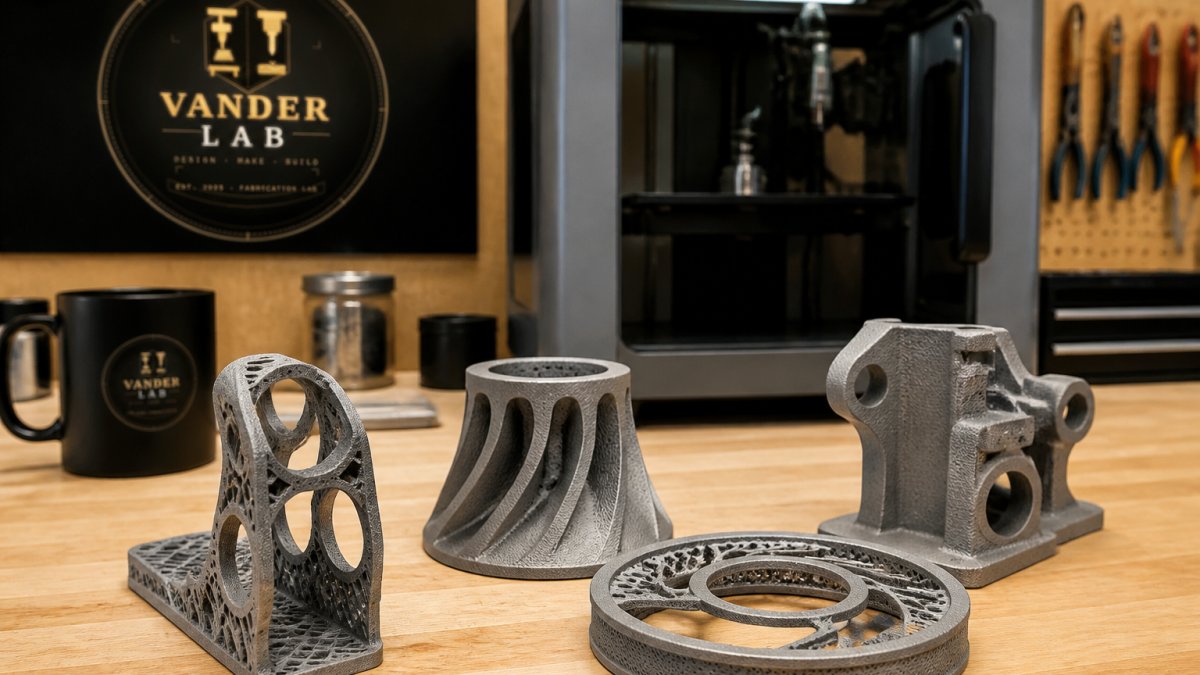
For small-batch production and custom fabrication work, a local partner often delivers the best balance of quality, communication, and turnaround time. VanderLab builds precision parts from a home fabrication lab in Mebane, North Carolina, offering custom CNC machining, 3D printing, and CAD design services. We work from sketches, photos, or rough ideas, with experience in materials from PLA and PETG to wood and metals.
Whether you are iterating on a prototype or need a production run delivered on time, the VanderLab team turns rough concepts into built-to-spec parts. Request a Custom Quote through the VanderLab contact page to discuss your project requirements.
Frequently Asked Questions
Who competes with Xometry for custom metal parts?
Several platforms compete with Xometry in the custom metal parts space. Fictiv offers a managed network with strong quality control, while SendCutSend specializes in fast, affordable laser-cut sheet metal. MakerVerse provides engineering-led support across multiple technologies, and Haizol operates a global RFQ marketplace. Each takes a different approach to sourcing, so the best choice depends on your part complexity, volume, and need for technical guidance.
What factors should you consider when choosing a custom metal fabrication service?
Start with the manufacturing process your part requires, whether that is CNC machining, laser cutting, or sheet metal fabrication. Evaluate the platform's quoting accuracy, lead times, and material selection against your project needs. For complex parts, engineering support and quality assurance matter more than price alone. Consider whether you need batch production or one-off prototyping, and check how each service handles CAD file uploads and design for manufacturability feedback.
Is a local fabrication lab a better alternative to large manufacturing marketplaces?
A local fabrication shop can be a better fit for small-batch metal manufacturing, custom signage, or projects that benefit from direct communication. You work with the person actually making the part, which simplifies design changes and ensures tight tolerances on specialized work. Large marketplaces excel at scale and automated quoting, but smaller shops like VanderLab offer hands-on problem solving and personal attention that anonymous platforms cannot match.
Why is Xometry so expensive?
Xometry's pricing reflects its automated quoting engine, vetted supplier network, and quality management systems. These conveniences carry overhead that gets built into each part's cost. For complex parts with strict tolerance specifications, the price may be justified. For simpler parts, or when you only need small-batch metal manufacturing, a specialized service like SendCutSend or a direct conversation with a local shop often produces a more competitive quote.