 ultimate-guide
Custom CNC Machining for Small Businesses
Table of Contents
- What Custom CNC Machining Offers Small Businesses
- Rapid Prototyping vs. Production Runs
- CNC Machining Design Tips for Non-Engineers
- How to Choose a CNC Machine Shop
- Materials, Tolerances, and Quality Standards
- Turnaround Times and Getting Your Parts On Schedule
- Custom CNC Machining in Practice
- Frequently Asked Questions
Last Updated: September 4, 2026
Custom CNC machining services for small businesses have moved from a niche luxury to an accessible tool for turning rough ideas into real parts. Whether you need a single prototype, a short production run of components, or a one-of-a-kind piece, the barrier to entry is lower than most owners realize. In this guide from VanderLab, a precision fabrication lab in Mebane, North Carolina, we break down how to use custom CNC machining effectively without an engineering degree or a factory budget.
The old assumption was that CNC work required massive minimum order quantities and deep pockets. That model has shifted. Many small shops, makers, and local organizations now use custom CNC machining for everything from custom signage and branded enclosures to batch-produced keepsakes and specialized components. The key is understanding how to talk to a machine shop, what to prepare, and how to design parts that are actually cost-effective to cut.
Below, we'll show you exactly how to navigate the process, from your first sketch to the finished part in your hand.
What Custom CNC Machining Offers Small Businesses
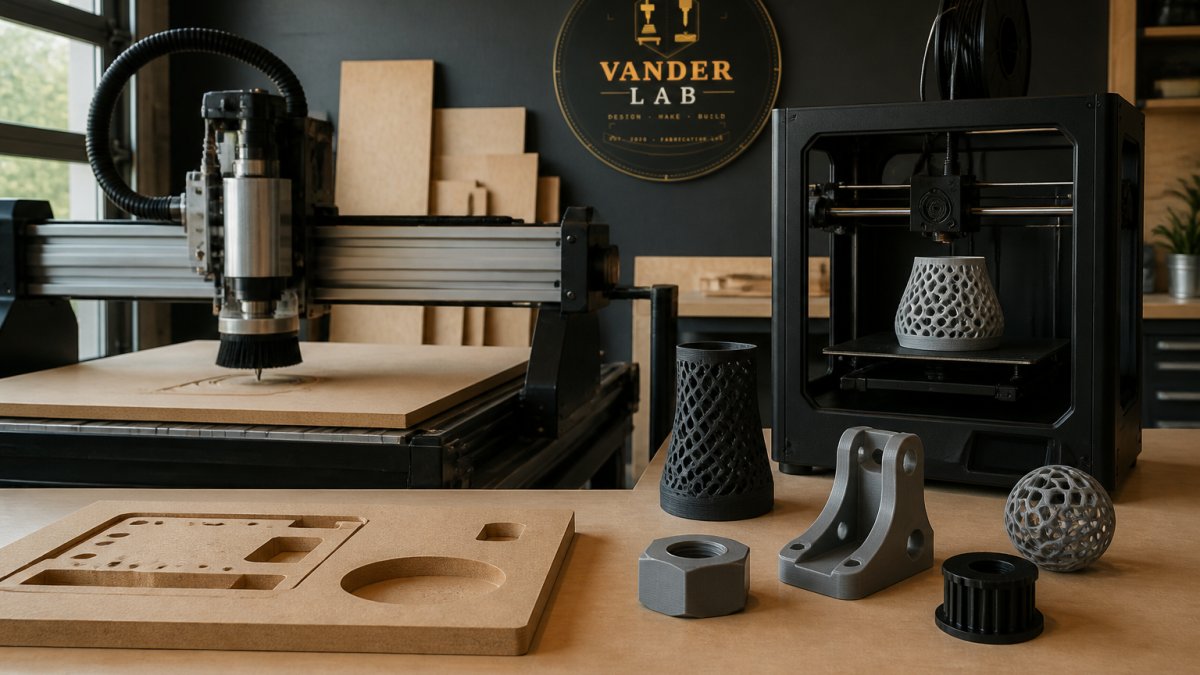
Custom CNC machining services give small businesses the ability to produce precise, repeatable parts without owning expensive equipment. CNC, or Computer Numerical Control, uses pre-programmed software to dictate the movement of factory tools, cutting away material from a solid block with tight tolerances. For a small business, this translates into a few clear advantages: consistency across a batch, the freedom to iterate on a design, and access to materials like metal alloys and engineering plastics that are difficult to work with by hand.
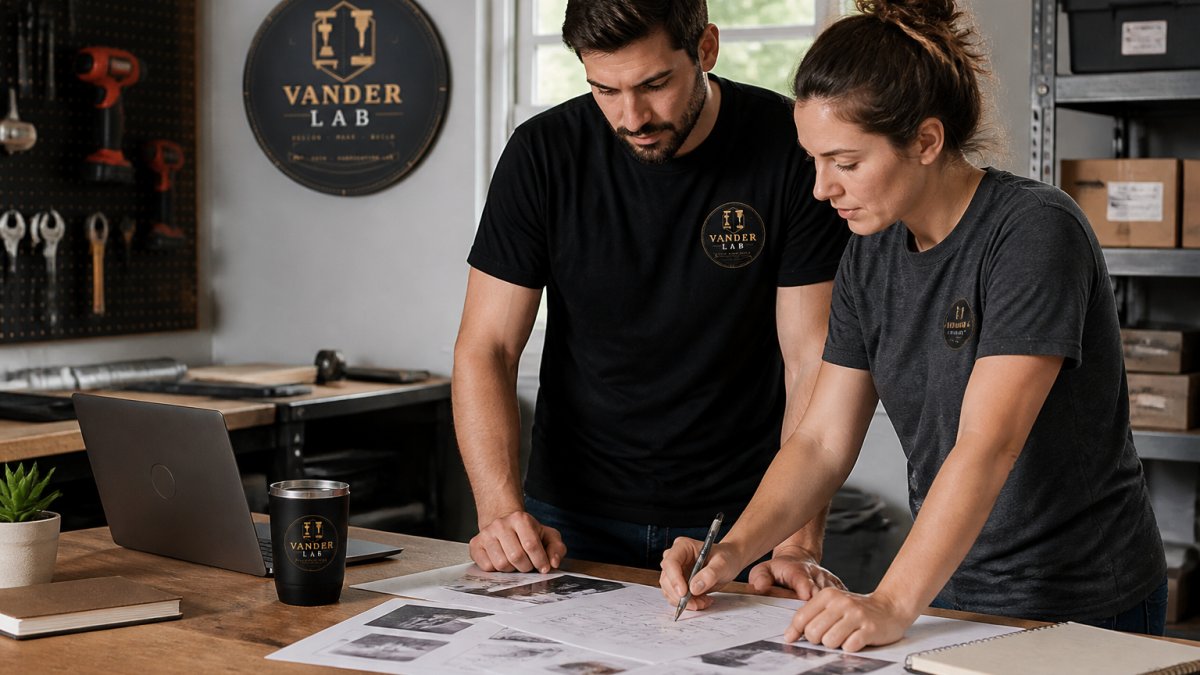
Most guides focus on the machinery, but the real value for a small business is the flexibility. A common approach is to work from a rough sketch, a photo, or even a verbal description. At VanderLab, we regularly take those rough ideas and turn them into print- or machine-ready files using CAD software. This means you don't need to be a designer to get a custom part built. You just need to know what problem the part solves and have a general sense of the size and fit.
The result is that a local school can get 250 custom-designed holders printed for a program, or a disc golf tournament can commission custom engraved trophies, all without those organizations needing to invest in their own machinery.
Rapid Prototyping vs. Production Runs
The first decision you will face is whether you need a prototype or a production run, and the distinction matters more for your budget than for the machine itself.
Rapid prototyping is about speed and iteration. You are testing a fit, a function, or a look, and you expect to make changes. The parts are often made one or two at a time, and the goal is to fail fast so you can refine the design. Prototype iteration is where you catch geometry problems, verify material compatibility, and confirm the part works before you commit to tooling or larger quantities.
Production runs, by contrast, are about repeatability and consistency. Once the design is locked, you need the same part, cut to the same tolerances, every single time. This is where low-volume manufacturing shines for small businesses. You might need 50 units, not 5,000. Many shops that cater to large corporations won't touch an order that small, but a flexible partner will treat it as a core part of their workflow.
| Project Phase | Typical Quantity | Primary Goal | Design Flexibility |
|---|---|---|---|
| Rapid Prototyping | 1-5 parts | Test fit and function | High - changes expected |
| Pilot Run | 10-50 parts | Validate the process | Moderate - minor tweaks |
| Production Run | 50+ parts | Consistent output | Low - design is frozen |
A practical tip: do not ask for a production quote on a part you have never physically held. The cost of a few prototype parts is almost always worth the money you will save by not machining 100 parts with a design flaw.
CNC Machining Design Tips for Non-Engineers
You do not need to be a machinist to design a part that is easy to make, but understanding a few basics of design for manufacturing will save you time and frustration.
Start with your stock material. CNC machining is a subtractive process. You start with a block of material, called billet stock, and cut away what you do not need. This means your part's size is limited by the stock available, and the cost is driven by how much material you remove and how long the tool is in the cut. A common mistake is designing a part with deep, narrow pockets that require special tooling to reach. Try to keep features shallow and accessible.
Mind your internal corners. A CNC cutter is round, so it cannot cut a sharp 90-degree internal corner. If you need a square corner, a machinist must use a smaller tool or a different process. Designing with a small radius in your internal corners is one of the easiest ways to reduce cost.
Think about fixturing. The machine has to hold your part while it cuts. If your design is a thin, flat sheet, it is easy to hold. If it is an odd, asymmetric shape, the shop has to build custom fixture design to keep it in place, which adds setup time. For a one-off part this is fine, but for a production run, simplifying the geometry to make it easier to hold will lower your per-part cost.
Ask about post-processing. A raw machined part has visible tool marks. If you need a specific surface finish, whether a smooth polish or a matte texture, tell the shop upfront. It is much harder to add a finish after the part is cut than to plan for it during programming.
How to Choose a CNC Machine Shop
Choosing the right CNC machine shop is less about finding the closest one and more about finding a partner who understands your scale. A vetting checklist helps you avoid the frustration of a shop that over-promises or under-delivers.
First, ask about their communication style. Will you be talking directly to the machinist who runs the job, or are you routed through a sales representative? For small businesses, direct communication often catches design issues before they become costly mistakes.
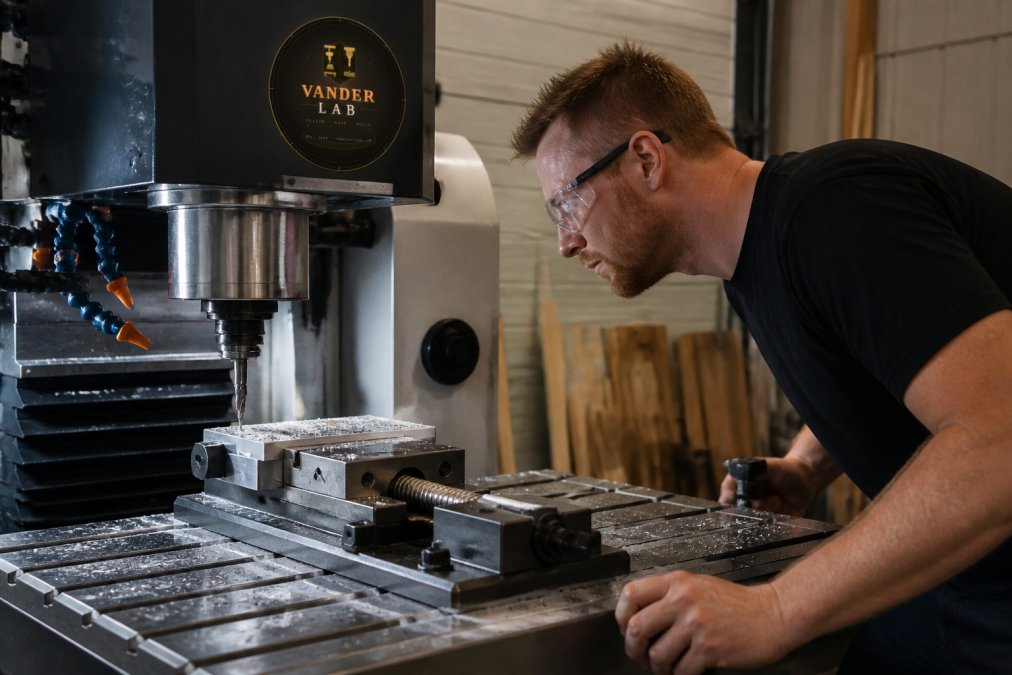
Second, review their capabilities honestly. Do they offer both CNC milling and CNC turning? Multi-axis machining is impressive, but you rarely need a 5-axis machine for a simple bracket. A shop with a solid 3-axis mill and a good attitude is often a better fit for small jobs than a large facility focused on aerospace tolerances.
Third, ask for references or examples of similar work. A shop that has produced custom hardware or batch production parts for other local businesses will understand your needs better than one that only works with large corporate clients.
Fourth, clarify their process for revisions. What happens if the part comes out wrong? A reputable shop will work with you to fix the issue, but you should understand their policy before you commit. Finally, look for a shop that offers a custom quote process rather than only an automated system, as this allows for a conversation about your specific part geometry and goals.
Materials, Tolerances, and Quality Standards
The material you choose dictates the part's strength, weight, cost, and how it feels in your hand. For prototypes, engineering plastics like PLA, PETG, and ABS are popular because they are inexpensive and fast to cut (peer-reviewed research). For functional parts that face stress or heat, you will likely move to metals or advanced plastics like TPU for flexibility.
Material compatibility is not just about strength. It affects machinability, or how easily the cutter can remove the material. Some aluminum alloys are a dream to cut, while others are gummy and slow. When you request a quote, tell the shop what the part does, not just what you want it made of. A good machinist might suggest a different alloy that is easier to cut and cheaper, while still meeting your strength requirements.
Tolerances are the allowable variation in a dimension. A standard tolerance for many jobs is around +/- 0.005 inch, which is fine for most brackets and housings (asme.org). If you need a part to press-fit into another, you might require +/- 0.001 inch. Tight tolerances cost more because they require slower speeds, more careful setup, and more inspection. For a small business, specifying a tight tolerance where you do not need one is a common way to inflate the bill.
Quality control is about verifying the part meets the spec. For most small business jobs, this involves a visual inspection and checking critical dimensions with calipers. For more complex parts, a shop might provide inspection reports. Ask what level of documentation you will receive with your order.
Turnaround Times and Getting Your Parts On Schedule
Lead time is often the deciding factor for small businesses, especially when a product launch or an event date is looming. The fastest way to get your parts on schedule is to be prepared before you contact the shop.
Have your technical drawings or 3D model upload ready, but do not let a lack of a perfect CAD file stop you. A clear sketch with dimensions is often enough to start a conversation. The more complete your information, the faster the shop can quote the job and get it on the machine.
A common mistake is forgetting that CNC programming takes time. Before the machine ever starts cutting, a programmer must create the toolpath. This is where a partner who offers CAD design services is invaluable. They can take your rough idea and prepare the file, saving you the learning curve of complex CAM software.
For urgent jobs, ask about setup time and machine availability. Many small shops run a mix of one-off prototypes and short production runs. If you need parts in a week, say so upfront. The shop can often accommodate a rush for a small job by scheduling it between larger runs. Shipping is another factor. If you need parts for a Friday event, you want them in hand by Wednesday, not sitting on a truck.
Custom CNC Machining in Practice
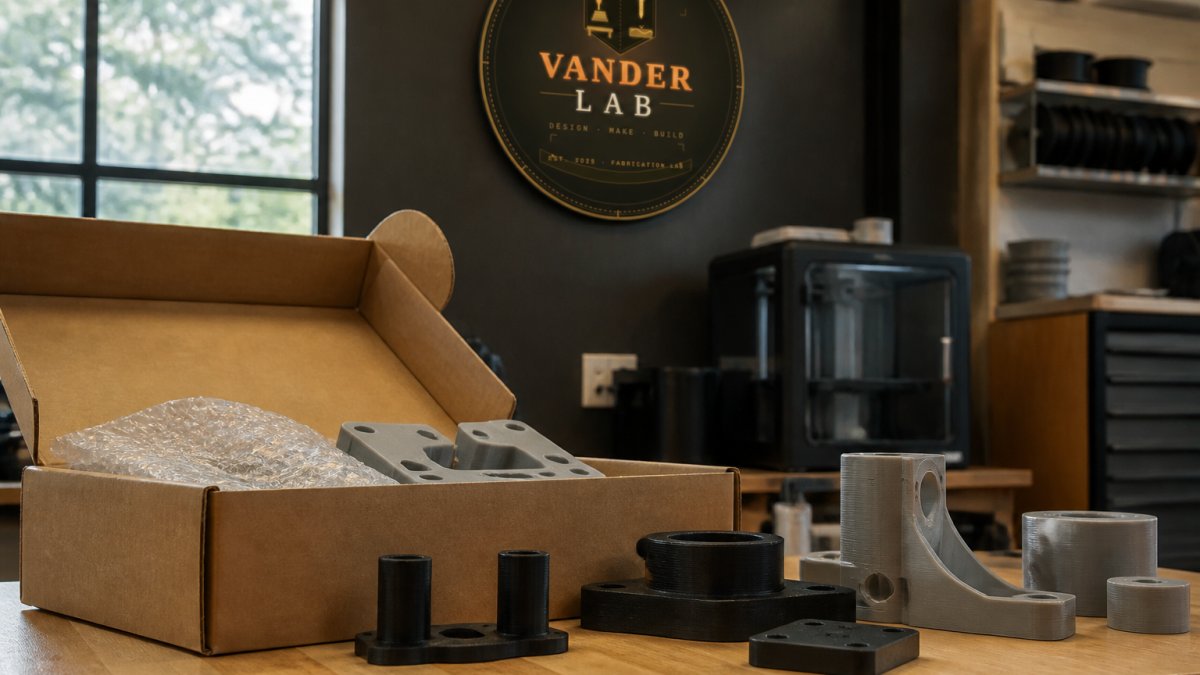
The best way to understand custom CNC machining is to look at how it solves real problems for small organizations. VanderLab has produced custom-designed holders for a local school, batch-produced keepsakes for community events, and created custom engraved trophies for a local disc golf tournament. These projects share a common thread: they are not high-volume industrial orders, but they require the same precision and care as any aerospace component.
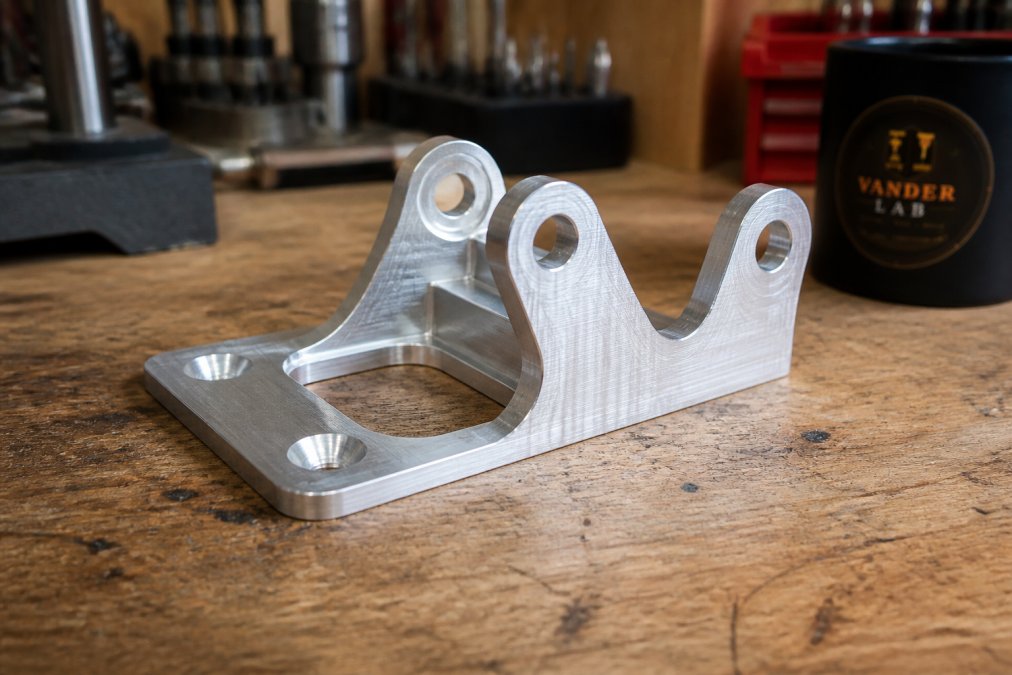
For a small business, the workflow is straightforward. You bring an idea, a sketch, or a problem. The shop helps you refine the design for manufacturability, suggests materials, and provides a custom quote. Once you approve, they handle the CNC programming, the setup, and the cutting. A few days later, you have a functional part in your hand.
The real difference between a good experience and a frustrating one comes down to the relationship. A large online platform might offer an instant quote, but you will rarely get a call from a machinist asking if you have considered how the part will be held during cutting. A local partner who works from a home fabrication lab brings a different level of care, treating your project as a collaboration rather than just another ticket in the queue.
If you are ready to move past the idea stage, the next step is simple. Reach out for a custom quote and start a conversation about your part, your timeline, and how to make it a reality. You can also browse finished examples and custom work on our Ebay Shop to see the range of what's possible.
Frequently Asked Questions
How much does custom CNC machining cost for a small business?
Cost depends on part complexity, material selection, batch quantity, and turnaround time. A simple prototype in plastic costs less than a multi-axis metal component with tight tolerances. Rather than guessing, request a quote from your CNC partner with your CAD file or technical drawing. Most shops can provide project-based pricing.
What should I look for when choosing a CNC machine shop?
Verify their capabilities match your needs: do they handle your material (metal alloys, engineering plastics, etc.)? Check turnaround times and whether they offer design for manufacturing (DFM) feedback. Ask about their inspection process, and request references from similar projects. A good partner will review your CAD files for manufacturability before quoting.
How do I prepare my CAD files for custom CNC machining?
Include precise technical drawings with dimensions, tolerances, and material specifications. Define surface finish requirements and note any tight-tolerance features. If you're starting from a sketch or photo, many shops can help convert your rough idea into a machine-ready file. Always confirm your file format is compatible with your shop's CAD software before submitting.
What's the difference between rapid prototyping and production runs?
Rapid prototyping focuses on speed and iteration: you get one or a few parts quickly to test form, fit, and function. Production runs prioritize consistency and cost-per-unit across larger batches. Small businesses often start with prototyping to validate a design, then move to production once the part is proven. Lead times and pricing differ between the two.
Getting custom parts made does not have to be a mystery reserved for large corporations. Small businesses, schools, and individuals can access the same precision technology by working with a partner who understands their scale. At VanderLab, we combine precision fabrication with a personal touch, turning rough concepts into built-to-spec parts, whether it is a single prototype or a batch production run. Get started with VanderLab and bring your next project from the garage to the finish line.
This article was written using GrandRanker
Frequently Asked Questions
Q: How much does custom CNC machining cost for a small business?
A: Cost depends on part complexity, material selection, batch quantity, and turnaround time. A simple prototype in plastic costs less than a multi-axis metal component with tight tolerances. Rather than guessing, request a quote from your CNC partner with your CAD file or technical drawing. Most shops can provide project-based pricing.
Q: What should I look for when choosing a CNC machine shop?
A: Verify their capabilities match your needs: do they handle your material (metal alloys, engineering plastics, etc.)? Check turnaround times and whether they offer design for manufacturing (DFM) feedback. Ask about their inspection process, and request references from similar projects. A good partner will review your CAD files for manufacturability before quoting.
Q: How do I prepare my CAD files for custom CNC machining?
A: Include precise technical drawings with dimensions, tolerances, and material specifications. Define surface finish requirements and note any tight-tolerance features. If you're starting from a sketch or photo, many shops can help convert your rough idea into a machine-ready file. Always confirm your file format is compatible with your shop's CAD software before submitting.
Q: What's the difference between rapid prototyping and production runs?
A: Rapid prototyping focuses on speed and iteration: you get one or a few parts quickly to test form, fit, and function. Production runs prioritize consistency and cost-per-unit across larger batches. Small businesses often start with prototyping to validate a design, then move to production once the part is proven. Lead times and pricing differ between the two.