 listicle
Custom CNC House Address Signs: A 2026 Guide
Table of Contents
- What Custom CNC House Address Signs Deliver
- Materials That Stand Up to the Elements
- Modern House Numbers: Design and Customization
- Outdoor Address Plaque Installation: Methods and Hardware
- Visibility Standards and Compliance
- Lighting Integration and Enhanced Visibility
- Sustainability and Sourcing Considerations
- Frequently Asked Questions
Last Updated: October 1, 2026
What Custom CNC House Address Signs Deliver
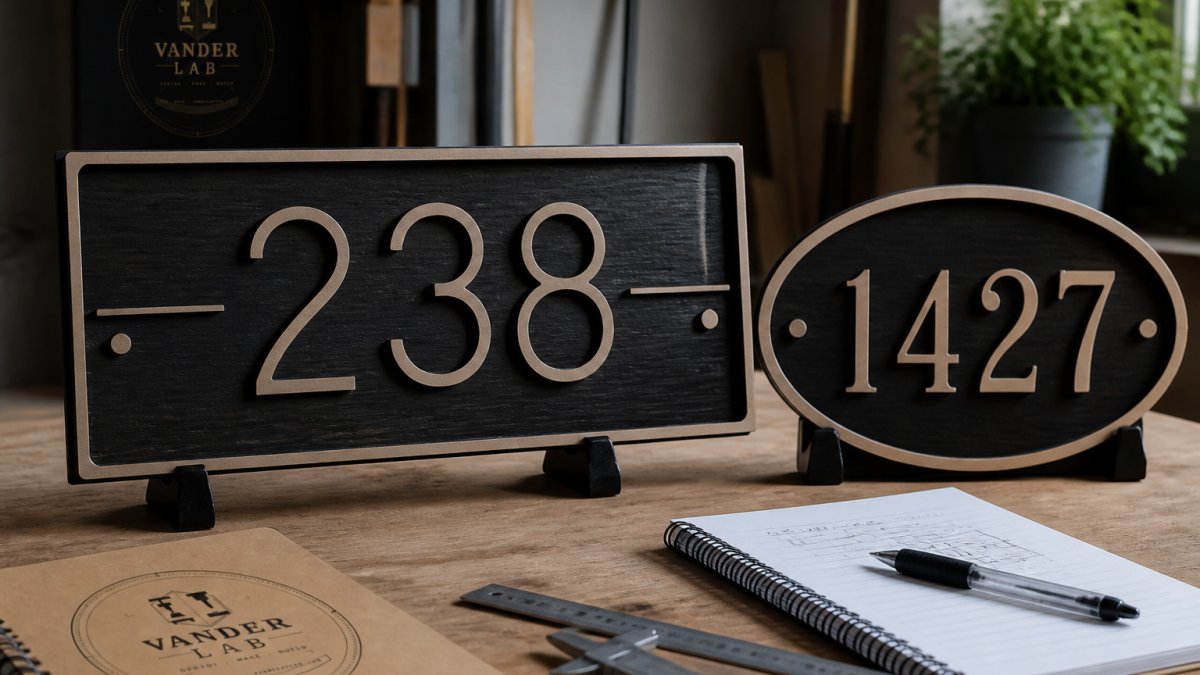
A custom CNC house address sign is more than a functional marker, it's a precision-built statement about who lives there. Cut with tight tolerances on a CNC router, these signs transform a simple address into a personal welcome, whether you're settling into a new home, marking a milestone, or simply choosing something made with intention over mass-produced alternatives.
Custom CNC house address signs represent precision fabrication at its core: taking an idea and turning it into something built to last. Precision-built signs stay sharp, weatherproof, and beautiful for decades, while mass-produced alternatives fade, rust, or crack within years.
Why CNC precision matters for outdoor signage
A CNC router follows exact specifications, creating precision edges that resist water infiltration, paint chipping, and weathering far better than rough cuts.
Tight tolerances prevent micro-gaps where moisture seeps in, keeping your custom CNC house address sign protected longer in harsh weather.
Built to last: durability and weather resistance
Custom CNC house address signs made from quality materials with proper coatings handle decades of sun, rain, temperature swings, and salt air without fading or corroding.
Powder coating creates a hard, weather-resistant shell, while hand-finishing details, sanding edges smooth, applying protective oils to wood, sealing acrylic, add durability that mass-produced signs skip.
Materials That Stand Up to the Elements
Your choice of material shapes both how your custom CNC house address sign looks and how long it lasts. Each material brings different strengths to outdoor conditions.
Powder-coated steel and rust-proof metals
Aluminum naturally resists corrosion, while galvanized steel is coated with zinc for protection.
For coastal areas or high-humidity climates, powder-coated steel or aluminum outlasts unprotected alternatives by years.
Brushed aluminum and corrosion resistance
Brushed aluminum has a warm, modern aesthetic and naturally resists corrosion, making it ideal for custom CNC house address signs that see weather without heavy maintenance.
Wood and acrylic options for custom designs
Wood brings warmth and character, with CNC routing creating crisp cuts perfect for intricate fonts.
Acrylic offers a modern, sleek look and resists fading.
Modern House Numbers: Design and Customization
Your custom CNC house address sign should match your home's architectural style while remaining visible from the street.
Font selection and typography for curb appeal
Bold sans-serif fonts read clearly from a distance and feel modern, while serif fonts add tradition but are harder to read from far away.
Choose fonts that match your home's character: geometric fonts for craftsman homes, serif for colonial, clean lines for modern minimalist spaces.
Test your font choice from across the street. Numbers should be at least 4 inches tall for visibility from a moving vehicle.
Finish options and architectural style matching
Finishes set the tone: matte black for contemporary, brushed aluminum for sophisticated, weathered bronze for tradition.
Hand-finished details add character.
Size and dimensional specifications
Standard house numbers are 4 to 6 inches tall. Larger signs, 8 to 15 inches, make a bolder statement and improve visibility for emergency services.
Outdoor Address Plaque Installation: Methods and Hardware
Installation quality determines how long your custom CNC house address sign stays secure. Poor mounting leads to sagging, water infiltration, and failure.
Mounting templates and hardware options
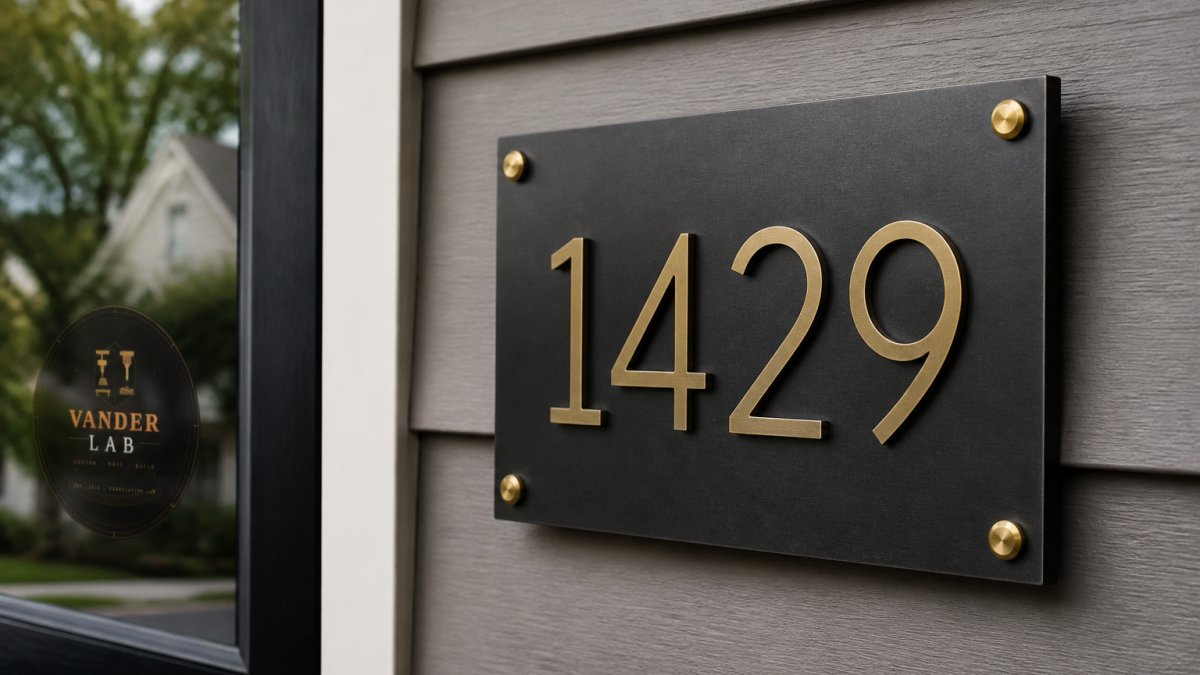
For masonry, use masonry anchors. For wood siding, use corrosion-resistant screws. For vinyl siding, use brackets that distribute weight.
DIY installation guide for homeowners
Installing a custom CNC house address sign yourself is straightforward if you follow these steps:
-
Choose your location. Select a spot visible from the street, typically at eye level or slightly above on the front of your home. Avoid shaded areas where visibility suffers.
-
Use the mounting template. Tape the template to the wall, ensuring it's level. Mark hole locations with a pencil.
-
Drill pilot holes. Use a drill bit slightly smaller than your screws. Pilot holes prevent wood splitting and make driving screws easier.
-
Attach spacers if needed. Slide spacers onto screws before inserting into the wall. This creates an air gap behind the sign.
-
Mount the sign. Drive screws or bolts through the sign into the wall. Tighten firmly but don't over-torque, you can crack acrylic or strip threads.
-
Seal gaps. If mounting to wood, apply caulk around the base to prevent water from seeping behind the sign.
Professional installation considerations
Professional installers ensure your sign meets local visibility codes and municipal requirements.
Visibility Standards and Compliance
Emergency responders rely on address signs to find homes quickly. Visibility standards exist for safety, and many areas enforce them through local code.
Contrast ratio and nighttime visibility
Black numbers on white offer maximum contrast. Dark colors on light backgrounds work well, while light colors on dark backgrounds work with slightly lower contrast.
Signage visibility for emergency services
House numbers should be at least 4 inches tall, reflective or illuminated for nighttime visibility, and mounted at eye level free from obstruction.
Lighting Integration and Enhanced Visibility
Lighting transforms a custom CNC house address sign from functional to striking. Proper lighting ensures nighttime visibility while adding curb appeal.
LED and solar lighting options
Uplighting creates dramatic shadow effects. Downlighting is more practical for visibility. Consider both aesthetics and function when choosing placement.
Reflective finishes and night visibility
A combination approach works best: a reflective finish for passive nighttime visibility plus optional lighting for enhanced curb appeal, ensuring visibility in all conditions.
Sustainability and Sourcing Considerations
Choosing materials and production methods that minimize environmental impact aligns with the values many homeowners hold about their homes and communities.
Locally sourced materials and production
Working with a local fabricator like VanderLab means your custom CNC house address sign is made close to home. Supporting local production keeps craftsmanship alive in your community.
Long-term value and environmental impact
Durable materials and precision fabrication reduce waste.
Choosing recyclable materials like aluminum or steel means your sign can be recycled at end of life.
| Material | Best For | Durability | Maintenance | Aesthetic |
|---|---|---|---|---|
| Powder-coated steel | High durability, bold colors | Minimal | Modern, clean | |
| Brushed aluminum | Modern, coastal areas | Minimal | Contemporary | |
| Wood | Warm, traditional homes | Regular sealing | Classic, warm | |
| Acrylic | Sleek, minimalist designs | Occasional cleaning | Modern, elegant | |
| Galvanized steel | Budget-conscious, durability | Minimal | Industrial |
Quick Comparison: Custom CNC vs. Mass-Produced Address Signs
Custom CNC Signs:
- Precision-cut with tight tolerances
- Built to your exact specifications
- Choice of materials and finishes
- Hand-finished details for character
- Support local makers and craftsmanship
Mass-Produced Signs:
- Generic designs, limited customization
- Standard sizing and fonts
- Limited material options
- Faster to purchase but less personal
- Factory-made, shipped nationwide
Featured Resources:
Frequently Asked Questions
What materials are best for outdoor CNC address signs?
Powder-coated steel, brushed aluminum, and galvanized metal are top choices for outdoor durability. Steel offers strength and corrosion resistance when properly finished; aluminum resists rust naturally and works well for modern aesthetics. Wood and acrylic can work in protected areas but require more maintenance. The best choice depends on your climate, architectural style, and how much weather exposure your sign will face. Precision CNC cutting ensures tight tolerances and clean edges regardless of material, which extends the sign's lifespan.
How do I choose the right size for a house address sign?
Size depends on viewing distance and visibility needs. For curb-side placement, numbers typically range from 4 to 15 inches tall. Larger numbers (8-12 inches) are readable from the street and improve nighttime visibility for emergency services. Consider your home's architectural style, wall space, and how close viewers will be. Test proportions by printing a mockup at actual size before ordering. Dimensional specifications should account for mounting space and any surrounding décor or landscaping that might affect visibility.
Are CNC-cut metal signs weather-resistant?
Yes, when properly finished. CNC-cut metal signs are inherently durable, and powder-coated finishes provide excellent corrosion resistance for outdoor use. The precision of CNC routing means no rough edges where rust can begin, and hand-finishing removes burrs that trap moisture. Brushed aluminum naturally resists oxidation, while galvanized steel offers long-term protection. Regular inspection and occasional cleaning keep signs looking new for years. The tight tolerances from CNC machining ensure the finish adheres uniformly, preventing peeling or degradation.
Can I customize the font and typography of a CNC address sign?
Absolutely. CNC routing and laser engraving allow nearly unlimited font selection and custom typography. You can choose from classic serif fonts for traditional homes or modern sans-serif styles for contemporary designs. Custom lettering, decorative elements, and personalized text are all possible. The precision of CNC cutting ensures clean, consistent letterforms at any size. When working with a custom fabricator, you can provide font files or describe your preferred style, and they'll translate your vision into a print-ready design before cutting.
How are custom CNC address signs mounted to a house?
Most custom CNC signs come with mounting hardware or templates that guide installation. Common methods include lag bolts into wood siding, anchors for masonry, or adhesive backing for smooth surfaces. Mounting templates ensure proper alignment and spacing. For DIY installation, locate studs or use appropriate anchors for your wall type, drill pilot holes, and secure with corrosion-resistant hardware. Professional installation is recommended for masonry or if you're unsure about wall composition. Proper mounting ensures the sign stays level, secure, and protected from weather and impacts.